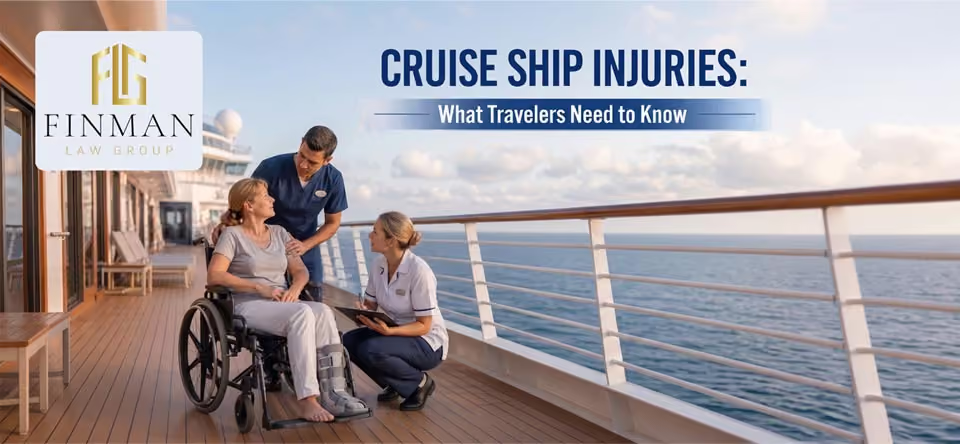
Cruiseship Injuries: What Florida Travelers Need to Know

Cruiseship Injuries: What Florida Travelers Need to Know

Article content

There is nothing quite like the feeling of stepping onto a cruise ship. The ocean air, the buffet lines, the promise of a week without emails. Floridians know this feeling better than anyone. Our state is home to some of the busiest cruise ports in the world, and millions of us set sail every year from Miami, Fort Lauderdale, and Port Canaveral.

But here is something most travelers never think about until it happens. Injuries at sea are more common than people realize, and when they happen, everything about the situation feels unfamiliar. You are usually far away from home, far from your own doctor, and dealing with a company whose rules are printed in fine print you probably haven't read.

Why Injuries at Sea Feel So Different

A cruise ship is basically like a floating city. Thousands of people share pools, staircases, dining rooms, and decks that are often wet from ocean spray or rain. Slips and falls happen. Equipment malfunctions. Food can be handled improperly. Railings can fail. Sometimes supervision around pools or activities isn't at the level it should be.

The tricky part is that most cruise ship injuries are not governed by the same laws that apply on land. Maritime law takes over once the ship leaves port, and it works very differently from what most Florida residents are used to. That difference alone is why so many injured passengers feel lost when they try to figure out what comes next.

The Fine Print Matters More Than You Think

That ticket you booked? It is actually a contract, and cruise lines pack those contracts with rules that can work in their favor. Many tickets shorten the window of time a passenger has to take action after an injury. Some require the incident to be reported right away, before the ship even returns to port. Waiting too long can sometimes make things much harder down the road.

This is not meant to scare anyone. It is simply the reality of how cruise travel works, and knowing it ahead of time puts you in a much better position.

Where Cruise Injury Cases Are Actually Handled

Here is a detail that surprises almost everyone. If a lawsuit ever becomes necessary, passengers usually cannot just file in their home state. Buried in that same ticket contract is something called a forum selection clause, which spells out exactly which court must handle any dispute with the cruise line.

For the major cruise lines, that court is almost always in Miami. Carnival, Royal Caribbean, and Norwegian are all headquartered in South Florida, and their ticket contracts generally require cases to be filed in federal court in the Southern District of Florida or in Miami-Dade County. Courts have consistently upheld these clauses too, going all the way back to a US Supreme Court decision involving Carnival in the early 1990s.

Think about what that means in practice. A passenger from New York, Texas, or California who was injured on a cruise that departed from a completely different port will still, in most cases, usually end up with a case in Miami. Cruise injury claims from across the entire United States typically flow through South Florida.

For Finman Law Group, that’s home turf. No matter where in the country you live, if your cruise injury case points to South Florida, you deserve a team that knows these courts and handles maritime claims right where they are decided.

What Passengers Can Do in the Moment

If an injury happens on board, a few simple habits can make a real difference later.

  • Report the incident to ship staff right away and ask for written documentation of the report.
  • Take photos of the area, your injury(ies), and anything else that may have contributed to the accident, like a wet floor or a broken railing etc.
  • Get the names and contact information of any witnesses who saw what happened.
  • Visit the ship's medical team, even if the injury seems minor at first.

On that last point, ships do have medical teams on board, but their resources may be limited compared to a hospital. If an injury is serious, follow-up care back home is often needed. Holding onto every medical record, from the ship's clinic to your own doctor, helps to provide a complete picture of what happened onboard and how it affected you.

The Many Ways Things Go Wrong at Sea

When people picture a cruise injury, they usually think of a slip on a wet deck or similar. That happens plenty, but the range is actually much wider. Passengers experience falls on staircases and gangways, food poisoning from improperly handled meals, pool and waterslide accidents, injuries from broken railings or furniture, and even harm caused by security failures on board or during a shore excursion.

Each of these situations plays out a bit differently, but they do share one thing in common. Somewhere along the way during your trip, a safety measure that should have protected passengers did not do its job as it should have. Recognizing that pattern is often the first step in understanding what happened and why.

When the Cruise Line Falls Short

Cruise lines have a responsibility to keep passengers reasonably safe. That covers everything from maintaining walkways and railings to handling food properly and providing adequate security. When that responsibility isn't met and someone gets injured, the cruise line may be held accountable for the harm that has been caused.

Every situation is totally different, and the full details matter completely. That's why it helps to talk with a team that understands how maritime injury claims actually work. These cases involve careful documentation, strong evidence, and possibly some rules that most people have never encountered before.

Finman Law Group helps travelers from all across the United States understand their rights and move forward after an injury at sea. Because so many cruise cases end up in South Florida, working with a team based right here can make all the difference. A cruise should be one of the best weeks of your year. If something goes wrong out on the water, you deserve support that puts your wellbeing first and helps you get back to enjoying life on solid ground.

There is nothing quite like the feeling of stepping onto a cruise ship. The ocean air, the buffet lines, the promise of a week without emails. Floridians know this feeling better than anyone. Our state is home to some of the busiest cruise ports in the world, and millions of us set sail every year from Miami, Fort Lauderdale, and Port Canaveral.

But here is something most travelers never think about until it happens. Injuries at sea are more common than people realize, and when they happen, everything about the situation feels unfamiliar. You are usually far away from home, far from your own doctor, and dealing with a company whose rules are printed in fine print you probably haven't read.

Why Injuries at Sea Feel So Different

A cruise ship is basically like a floating city. Thousands of people share pools, staircases, dining rooms, and decks that are often wet from ocean spray or rain. Slips and falls happen. Equipment malfunctions. Food can be handled improperly. Railings can fail. Sometimes supervision around pools or activities isn't at the level it should be.

The tricky part is that most cruise ship injuries are not governed by the same laws that apply on land. Maritime law takes over once the ship leaves port, and it works very differently from what most Florida residents are used to. That difference alone is why so many injured passengers feel lost when they try to figure out what comes next.

The Fine Print Matters More Than You Think

That ticket you booked? It is actually a contract, and cruise lines pack those contracts with rules that can work in their favor. Many tickets shorten the window of time a passenger has to take action after an injury. Some require the incident to be reported right away, before the ship even returns to port. Waiting too long can sometimes make things much harder down the road.

This is not meant to scare anyone. It is simply the reality of how cruise travel works, and knowing it ahead of time puts you in a much better position.

Where Cruise Injury Cases Are Actually Handled

Here is a detail that surprises almost everyone. If a lawsuit ever becomes necessary, passengers usually cannot just file in their home state. Buried in that same ticket contract is something called a forum selection clause, which spells out exactly which court must handle any dispute with the cruise line.

For the major cruise lines, that court is almost always in Miami. Carnival, Royal Caribbean, and Norwegian are all headquartered in South Florida, and their ticket contracts generally require cases to be filed in federal court in the Southern District of Florida or in Miami-Dade County. Courts have consistently upheld these clauses too, going all the way back to a US Supreme Court decision involving Carnival in the early 1990s.

Think about what that means in practice. A passenger from New York, Texas, or California who was injured on a cruise that departed from a completely different port will still, in most cases, usually end up with a case in Miami. Cruise injury claims from across the entire United States typically flow through South Florida.

For Finman Law Group, that’s home turf. No matter where in the country you live, if your cruise injury case points to South Florida, you deserve a team that knows these courts and handles maritime claims right where they are decided.

What Passengers Can Do in the Moment

If an injury happens on board, a few simple habits can make a real difference later.

  • Report the incident to ship staff right away and ask for written documentation of the report.
  • Take photos of the area, your injury(ies), and anything else that may have contributed to the accident, like a wet floor or a broken railing etc.
  • Get the names and contact information of any witnesses who saw what happened.
  • Visit the ship's medical team, even if the injury seems minor at first.

On that last point, ships do have medical teams on board, but their resources may be limited compared to a hospital. If an injury is serious, follow-up care back home is often needed. Holding onto every medical record, from the ship's clinic to your own doctor, helps to provide a complete picture of what happened onboard and how it affected you.

The Many Ways Things Go Wrong at Sea

When people picture a cruise injury, they usually think of a slip on a wet deck or similar. That happens plenty, but the range is actually much wider. Passengers experience falls on staircases and gangways, food poisoning from improperly handled meals, pool and waterslide accidents, injuries from broken railings or furniture, and even harm caused by security failures on board or during a shore excursion.

Each of these situations plays out a bit differently, but they do share one thing in common. Somewhere along the way during your trip, a safety measure that should have protected passengers did not do its job as it should have. Recognizing that pattern is often the first step in understanding what happened and why.

When the Cruise Line Falls Short

Cruise lines have a responsibility to keep passengers reasonably safe. That covers everything from maintaining walkways and railings to handling food properly and providing adequate security. When that responsibility isn't met and someone gets injured, the cruise line may be held accountable for the harm that has been caused.

Every situation is totally different, and the full details matter completely. That's why it helps to talk with a team that understands how maritime injury claims actually work. These cases involve careful documentation, strong evidence, and possibly some rules that most people have never encountered before.

Finman Law Group helps travelers from all across the United States understand their rights and move forward after an injury at sea. Because so many cruise cases end up in South Florida, working with a team based right here can make all the difference. A cruise should be one of the best weeks of your year. If something goes wrong out on the water, you deserve support that puts your wellbeing first and helps you get back to enjoying life on solid ground.

Additionally Reads

Windstorm Damages and How They Affect Florida Homeowners

Windstorm Damages and How They Affect Florida Homeowners

Discover how windstorms impact Florida homeowners. Learn about damage prevention, insurance claims, and protecting your investment with expert guidance.

Passenger Rights After an Auto Accident in Florida

Passenger Rights After an Auto Accident in Florida

Understand your rights as a passenger after an auto accident in Florida. Learn about compensation, no-fault insurance, and steps to navigate your recovery.

Dog Bite Injury Claims in Florida

Dog Bite Injury Claims in Florida

Learn about dog bite injury claims in Florida. Discover strict liability laws, practical steps, and emotional support for navigating these unexpected incidents.