

Topic:
Personal Injury, Accidents, Slip & Fall
Article content
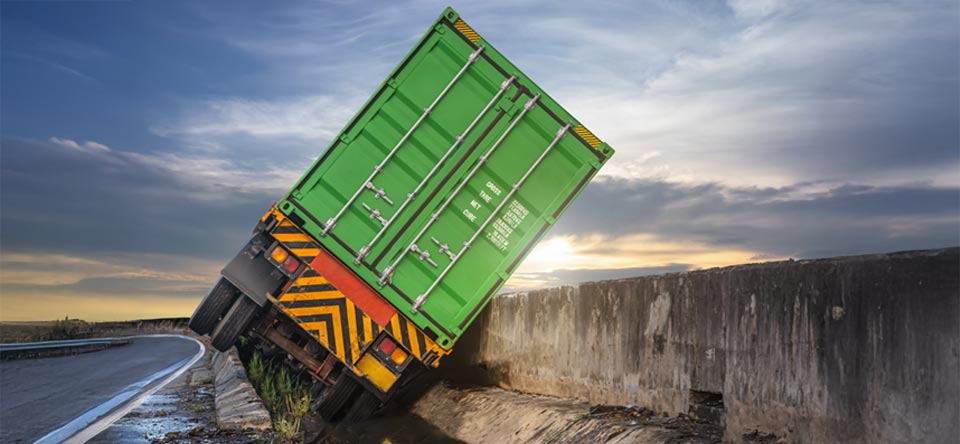
Most people have had a moment on the highway where a large commercial truck passes close by and the sheer size of it is briefly unsettling. That instinct isn't unfounded as a fully loaded commercial truck can weigh up to 80,000 pounds. That’s roughly 20 times the weight of an average passenger vehicle! When something goes wrong at that scale the results can be truly devastating, and the road to recovery is rarely quick.
If you or someone close to you has been involved in a collision with a commercial truck, it really helps to understand a few things about how these cases typically work. They're genuinely more involved than most people expect.
One of the first things that sets truck accident cases apart is the question of responsibility. In a typical two-car accident, liability usually comes down to one driver or the other. Truck accidents are often more layered than that.
Depending on the circumstances, there may be questions about multiple parties: the driver's actions and judgment, the trucking company's policies and their hiring practices, how the cargo was loaded and if properly secured, whether the vehicle was being properly maintained, and whether any mechanical components were in failure. Each of those threads can point to a different party — and each of those parties may have their own insurance coverage and legal representation. Sorting through all of it requires a thorough investigation, not just a quick review of the police report.
Modern big rigs and commercial trucks are equipped with a good amount of technology and much of it provides data that can be very relevant to understanding what happened in a crash:
The challenge with it is that some of this data doesn't stay available indefinitely. Depending on the system, records can be overwritten within a few days or weeks. That's one of the more pressing reasons why time matters in truck accident cases. You have to make sure key information doesn't disappear before anyone has a chance to look at it.
Trucking is one of the more heavily regulated industries in our country, and that’s for good reason. Drivers are subject to strict federal rules governing how many consecutive hours they can spend behind the wheel, mandatory rest requirements, how cargo must be loaded and secured, and how frequently vehicles must be inspected and serviced. When those standards aren't being met, it can be a major factor in a claim. Establishing that requires knowing what the regulations say, what records to request, and how to interpret what you find.
This is one area where having someone familiar with the trucking industry makes a real difference. These aren't details that show up on the surface, they do actually take some digging.
Trucking companies and their insurers deal with accident claims regularly. They have experienced teams who know the process, know what to look for, and also know how to manage the outcomes. That sounds a bit alarming but it's just the reality of going up against a large commercial operation after something like this happens. Having experienced representation on your side helps ensure you're not navigating that process at a disadvantage.
A truck accident can upend everything, such as your health, your work, and even one’s sense of normalcy. The legal side of things is just one piece of the larger puzzle you're suddenly dealing with. But it's a real important one, and it's worth getting it right!
Whether the truck accident just happened or you've been trying to figure out your next step for a while, the team at Finman Law Group is here to help you understand where things stand and what your options may look like.
Call us at (786) 786-9633, email us at info@finmanlawgroup.com, or contact us through our website to schedule a free, no-obligation consultation.
We're here to make sure you're not navigating this alone.






Balcony leaks damage Florida condo units below, and claims get complicated fast. Learn what owners typically do and how Finman Law Group helps. Free evaluation.
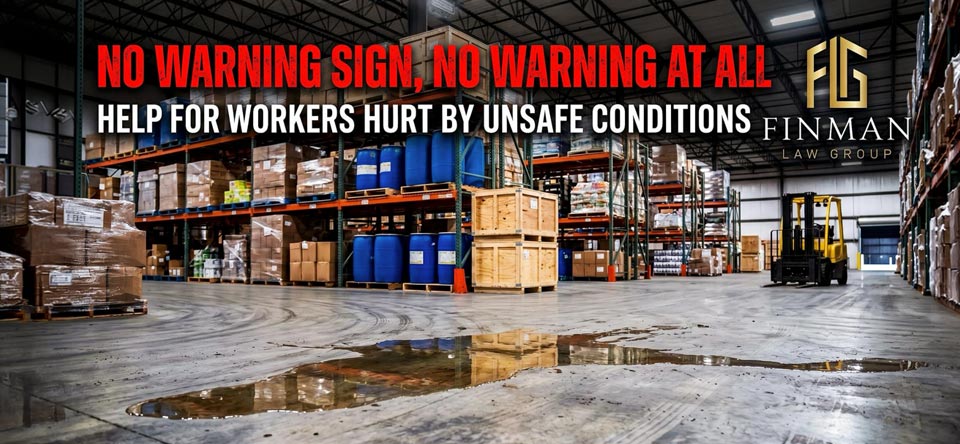
Dangerous conditions and missing warnings injure workers across Greater Houston. Learn what injured employees typically do and how Finman Law Group helps. Free evaluation.
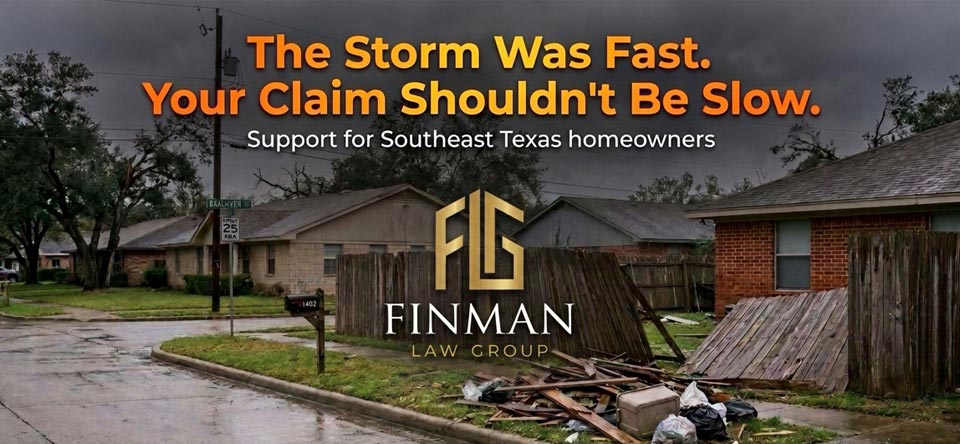
Storm Edouard left roof leaks, broken windows, and water damage across Southeast Texas. Finman Law Group helps homeowners with delayed or underpaid claims.