
Topic:
Personal Injury, Accidents, Slip & Fall

Article content
Houston does not really stop building. Cranes downtown, subdivisions pushing further into Fort Bend and Montgomery counties, industrial work along the ship channel, roadwork that seems permanent. It is one of the most active construction markets in the country, and that activity supports an enormous number of jobs.
It also carries real risk. Construction consistently ranks among the most dangerous industries in the United States, and Houston adds a variable that most cities do not have to think about nearly as hard: the heat.
Falls from heights remain the single largest cause of serious construction injuries. Scaffolding, roofing, ladders, elevated platforms, unguarded openings on an unfinished floor. The physics are unforgiving and the margin for error is small.
Equipment accidents come next. Excavators, cranes, forklifts, and skid steers are all working in shared space with people on foot, often with limited visibility and a lot of ambient noise. A backup alarm does not do much good on a site where three other machines are running.
Electrical injuries show up throughout a project's life, not just at the end. Temporary power, exposed conductors, overhead lines that a boom swings a little too close to, panels that someone assumed were dead.
And then there is the slow-motion category that people underrate: repetitive strain. Shoulders, knees, backs, and wrists that hold up fine for years and then do not. These injuries don’t have a dramatic incident attached to them, which sometimes makes them harder to address, but they end careers just the same.
Houston summers are not a background condition. They’re an active hazard. Heat combined with humidity means sweat evaporates poorly, which means the body's main cooling mechanism works at a reduced capacity. Dehydration sets in earlier than workers may expect.
The real danger is what heat stress does to judgment. Well before anyone collapses, they get sluggish, their attention begins to narrow, and their reaction time slows down. A worker three hours into a July afternoon is measurably more likely to make the small mistake that causes the large accident. Heat does not just cause heat injuries. It causes other ones too.

Modern construction sites run on layered subcontracting. A general contractor coordinates framing, electrical, plumbing, HVAC, concrete, and finish crews, and on a given Tuesday several of those trades are working in the same footprint. They may work for different companies, keep different schedules, follow different safety cultures, and in some cases speak different primary languages.
Coordination usually works. When it doesn’t, the failures are specific and preventable. One crew removes a guardrail to move material and the next crew does not know it is gone. A lockout tag comes off early. Someone assumes the trench was inspected because it looks like it already was.
When an incident happens, people generally find it helps to:
✅ Document the scene before it changes: Equipment, safety gear present or absent, site conditions, and the specific spot where it happened. Sites get cleaned up quickly, sometimes within the hour, and what you can photograph today may be gone tomorrow.
✅ Track medical treatment consistently: Every visit, every diagnosis, every restriction, and how the injury affects ordinary life. Not just the work part. Sleep, driving, lifting your kid, getting through a normal day.
✅ Get names: Names of coworkers who saw it, which companies were on site, and any incident report that gets filed.
Nobody clocks in expecting to get hurt. But construction work rewards people who think a step ahead, and that habit does not have to stop at the job itself. Knowing where the shade and water are, knowing who to tell if something looks wrong, knowing what to do in the first hour after an incident. That is the same practical mindset that makes someone good at the work.
Houston's growth is not slowing down. Neither should the attention paid to the people making it happen.
If you were hurt on a construction site in the Greater Houston area, Finman Law Group is happy to talk it through. No pressure, just a straight conversation about where you stand.





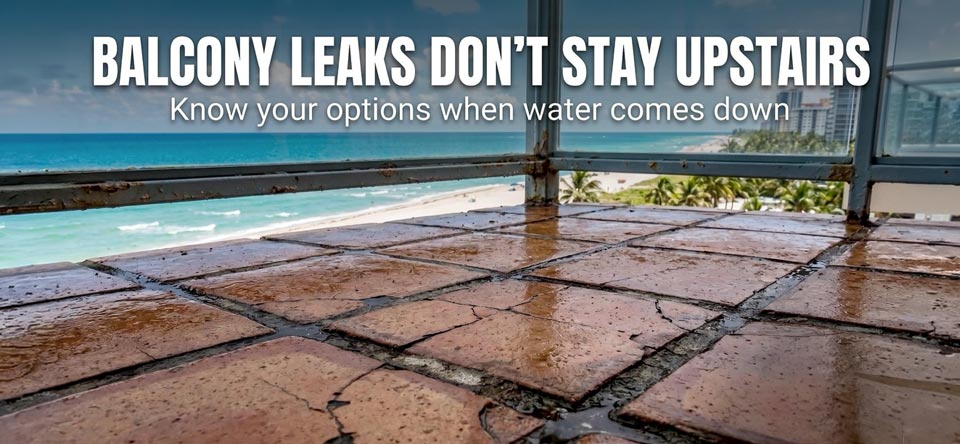
Balcony leaks damage Florida condo units below, and claims get complicated fast. Learn what owners typically do and how Finman Law Group helps. Free evaluation.
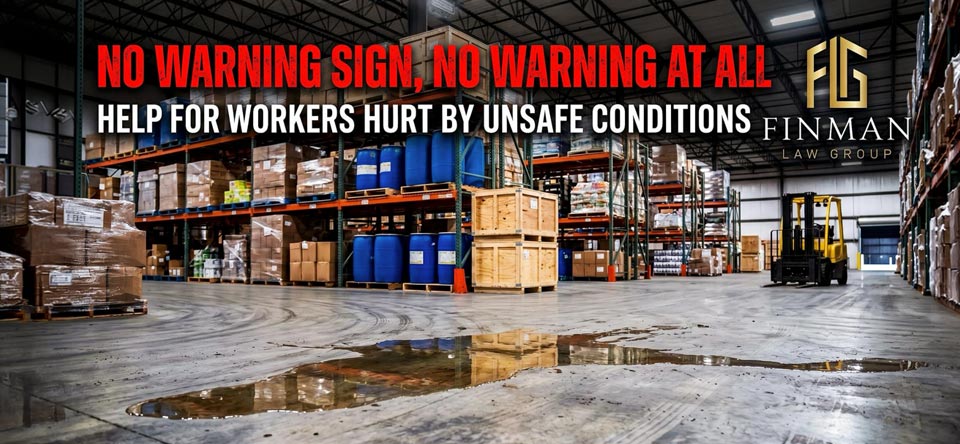
Dangerous conditions and missing warnings injure workers across Greater Houston. Learn what injured employees typically do and how Finman Law Group helps. Free evaluation.
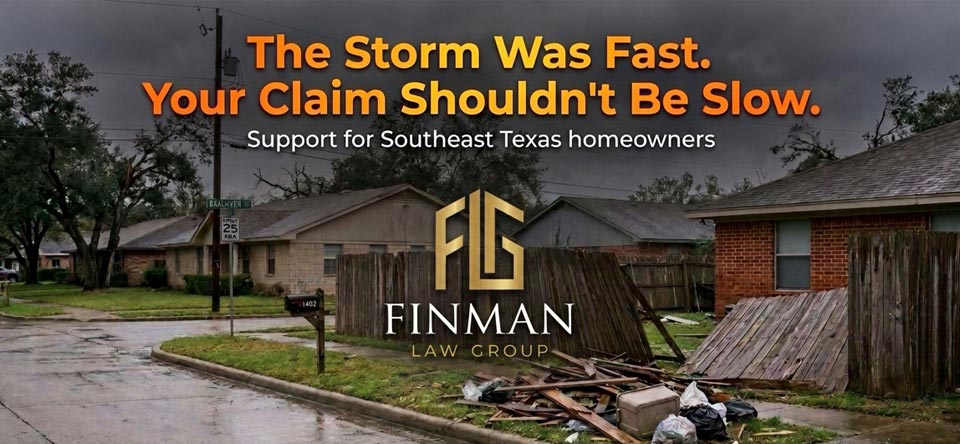
Storm Edouard left roof leaks, broken windows, and water damage across Southeast Texas. Finman Law Group helps homeowners with delayed or underpaid claims.