Bicycle Accidents in Florida and Texas: What Every Injured Cyclist Should Know

Bicycle Accidents in Florida and Texas: What Every Injured Cyclist Should Know

Article content

Most bicycle rides end the way they start: uneventfully. You get where you're going, lock up your bike, and move on with your day. But for a growing number of cyclists in Florida and Texas, a single ride ends with a collision, a trip to the emergency room, and a sudden crash course in how insurance claims work.

If you've been injured in a bicycle accident, the decisions you make in the days immediately following the crash can have a real impact on what comes next.

The roads are genuinely dangerous for cyclists

Florida and Texas consistently rank among the most hazardous states in the country for people riding bikes. The reasons are layered: high-speed arterial roads with minimal shoulder space, rapid suburban growth that hasn't kept pace with cycling infrastructure, heavy tourist traffic in many areas, and distracted driving that shows no signs of slowing down.

Cyclists have none of the protections that vehicle occupants take for granted. No airbags, no crumple zones, no seatbelts. A collision that might result in a fender bender for a driver can mean a traumatic brain injury, spinal damage, multiple fractures, or severe road rash for the person on the bike. And because injuries like these often worsen over time, the full picture of what a cyclist has suffered may not be clear for days or weeks.

Figuring out who is responsible

The driver of the vehicle that hit you is the most common source of liability, but it isn't always the only one. Depending on the circumstances, a commercial fleet operator, a local government that failed to maintain safe road conditions, or a property owner with a hazardous driveway or parking lot design could also share responsibility.

Both states use a comparative negligence framework, which means that your ability to pursue compensation doesn't disappear if you were partially at fault. If you were riding without a light after dark, or if the collision happened in a gray area of the road, that may factor into how fault is apportioned. But it doesn't end the conversation.

More coverage may be available than you expect

This surprises a lot of cyclists: your own insurance policies may cover you even though you weren't in a car. Your personal auto policy might include Personal Injury Protection or Medical Payments coverage that applies to bike accidents. If the driver who hit you was uninsured or underinsured, your own uninsured motorist coverage could step in. Homeowner and renter policies sometimes provide a layer of coverage as well.

Identifying every available source of compensation is one of the most consequential early steps in a bicycle accident claim, and it's easy to overlook policies you've had for years without thinking about them in this context.
What to do at the scene

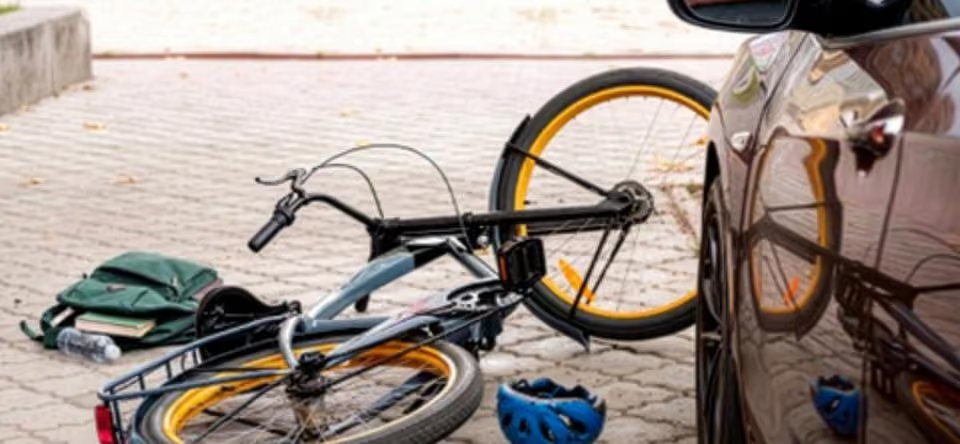
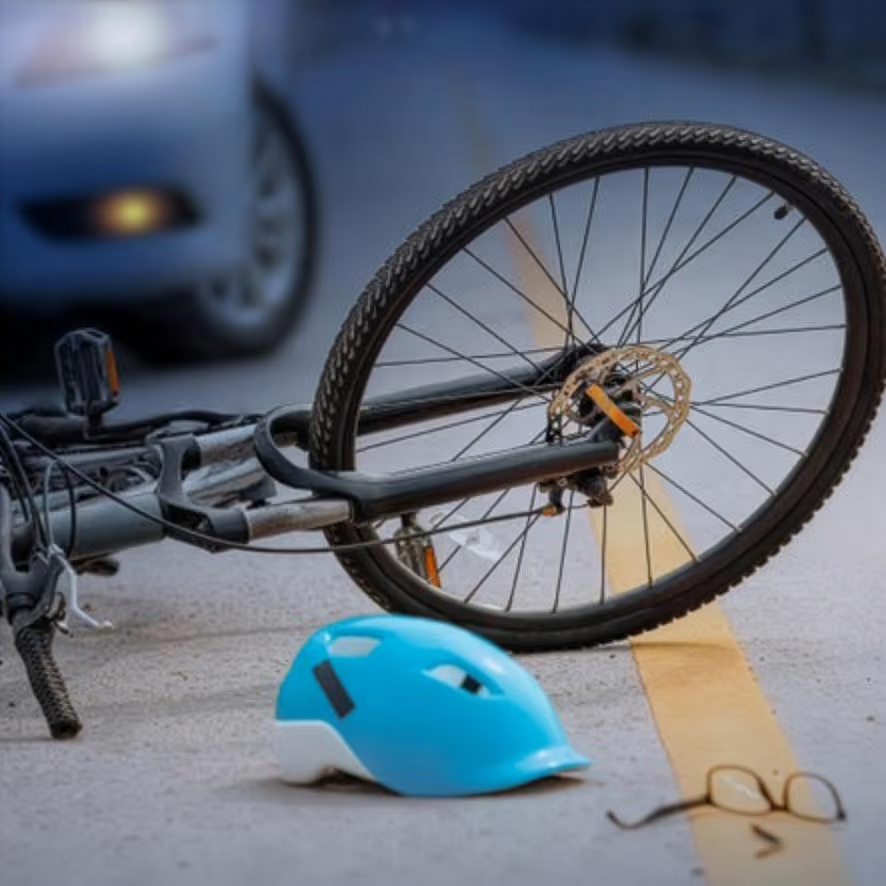
If you're physically able, document everything before you leave the scene. Photograph the vehicles, the road conditions, any relevant signage, and your visible injuries. Get the driver's contact and insurance information. Talk to any witnesses and collect their contact details. File a police report, even if the driver tries to discourage it.

Then get medical attention right away, even if you feel okay. Adrenaline masks a lot. A same-day medical record ties your injuries directly to the accident, which matters significantly in the claims process.

Before you talk to insurance

Insurance adjusters often reach out quickly after accidents, and they're trained to gather information that can limit the amount a company pays out. Before you give any recorded statement or agree to any settlement, it's worth speaking with someone who understands how these claims work and what your situation is actually worth.

📞 If you were hurt in a bicycle accident in Florida or Texas, call Finman Law Group at (786) 786-9633 or visit finmanlawgroup.com. We can help you understand what you're entitled to.

Most bicycle rides end the way they start: uneventfully. You get where you're going, lock up your bike, and move on with your day. But for a growing number of cyclists in Florida and Texas, a single ride ends with a collision, a trip to the emergency room, and a sudden crash course in how insurance claims work.

If you've been injured in a bicycle accident, the decisions you make in the days immediately following the crash can have a real impact on what comes next.

The roads are genuinely dangerous for cyclists

Florida and Texas consistently rank among the most hazardous states in the country for people riding bikes. The reasons are layered: high-speed arterial roads with minimal shoulder space, rapid suburban growth that hasn't kept pace with cycling infrastructure, heavy tourist traffic in many areas, and distracted driving that shows no signs of slowing down.

Cyclists have none of the protections that vehicle occupants take for granted. No airbags, no crumple zones, no seatbelts. A collision that might result in a fender bender for a driver can mean a traumatic brain injury, spinal damage, multiple fractures, or severe road rash for the person on the bike. And because injuries like these often worsen over time, the full picture of what a cyclist has suffered may not be clear for days or weeks.

Figuring out who is responsible

The driver of the vehicle that hit you is the most common source of liability, but it isn't always the only one. Depending on the circumstances, a commercial fleet operator, a local government that failed to maintain safe road conditions, or a property owner with a hazardous driveway or parking lot design could also share responsibility.

Both states use a comparative negligence framework, which means that your ability to pursue compensation doesn't disappear if you were partially at fault. If you were riding without a light after dark, or if the collision happened in a gray area of the road, that may factor into how fault is apportioned. But it doesn't end the conversation.

More coverage may be available than you expect

This surprises a lot of cyclists: your own insurance policies may cover you even though you weren't in a car. Your personal auto policy might include Personal Injury Protection or Medical Payments coverage that applies to bike accidents. If the driver who hit you was uninsured or underinsured, your own uninsured motorist coverage could step in. Homeowner and renter policies sometimes provide a layer of coverage as well.

Identifying every available source of compensation is one of the most consequential early steps in a bicycle accident claim, and it's easy to overlook policies you've had for years without thinking about them in this context.

What to do at the scene

If you're physically able, document everything before you leave the scene. Photograph the vehicles, the road conditions, any relevant signage, and your visible injuries. Get the driver's contact and insurance information. Talk to any witnesses and collect their contact details. File a police report, even if the driver tries to discourage it.

Then get medical attention right away, even if you feel okay. Adrenaline masks a lot. A same-day medical record ties your injuries directly to the accident, which matters significantly in the claims process.

Before you talk to insurance

Insurance adjusters often reach out quickly after accidents, and they're trained to gather information that can limit the amount a company pays out. Before you give any recorded statement or agree to any settlement, it's worth speaking with someone who understands how these claims work and what your situation is actually worth.

📞 If you were hurt in a bicycle accident in Florida or Texas, call Finman Law Group at (786) 786-9633 or visit finmanlawgroup.com. We can help you understand what you're entitled to.

Additionally Reads

What to Do When Your Insurance Company Denies Your Roof Claim

What to Do When Your Insurance Company Denies Your Roof Claim

Denied roof claim? It's not the final word. Learn how to challenge it effectively and protect your home with expert guidance from Finman Law Group.

Pedestrian Injury Claims in Florida and Texas. What Injured Victims Need to Know

Pedestrian Injury Claims in Florida and Texas. What Injured Victims Need to Know

Learn the essentials of pedestrian injury claims in Florida and Texas. Navigate complex legal systems and protect your rights. Get expert help today.

Protecting Your Property Rights in Post-Storm Florida

Protecting Your Property Rights in Post-Storm Florida

Ensure your property rights in post-storm Florida. Navigate title issues, boundary disputes, and insurance battles with expert guidance. Get legal help today.