Cracks in Your Florida Home and How to Tell Normal Settling From a Possible Sinkhole

Cracks in Your Florida Home and How to Tell Normal Settling From a Possible Sinkhole

Article content

What homeowners should know when cracks, shifting floors, or sticking doors raise questions about insurance coverage

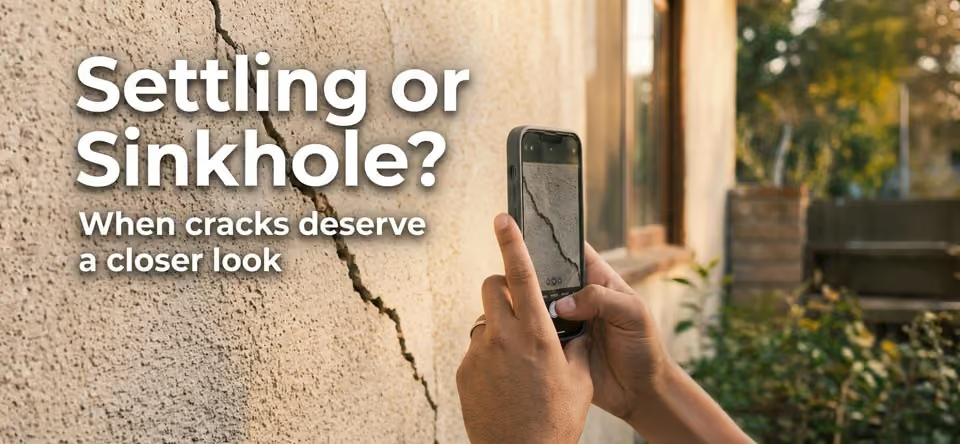
Walk through an older Florida home and you may notice a few cracks. A line around a window. A thin crack in the drywall. Maybe a door that doesn't close quite as smoothly as it used to. Sometimes these are simply signs of normal settling, the ordinary way homes move as soils shift and materials expand and contract. Other times, they can point to something much more serious. In Florida, one worry that crosses homeowners' minds when they notice new or worsening structural problems is sinkhole activity, and the difficult part is that the visible symptoms overlap with other kinds of foundation movement. That creates a complicated question for families and also insurance companies alike. What is actually causing and caused the damage?

Not Every Crack Means a Sinkhole

Let's start with some reassuring realities. Homes move over time, and a small drywall crack doesn't automatically mean there's a serious problem underneath the house. The concern grows when multiple symptoms show up together, or when existing problems keep getting worse. Signs worth paying attention to can include:

  • Cracks that become wider or longer over time, appear in multiple rooms at once, or run diagonally from the corners of doors and windows
  • Doors and windows that suddenly stick, floors that feel uneven, separation between walls and ceilings, and cracks in exterior stucco, brick, or the foundation itself

None of these signs, on their own, specifically proves a sinkhole is responsible. They're reasons to investigate further, calmly and carefully, rather than reasons to panic. The whole picture matters far more than any single crack.

Why the Cause of the Damage Matters So Much

Here's where this becomes more than a repair question. Florida insurance policies contain specific provisions dealing with sinkhole losses, and the exact coverage depends on the policy. Sinkhole coverage and catastrophic ground cover collapse coverage aren't necessarily the same thing, and that distinction can become very important when a family is trying to figure out what their policy actually covers. This is also where causation enters the story. An insurer may say the cracks come from ordinary settling, deterioration, or another excluded cause. The homeowner may believe something much more significant is happening beneath their home. That disagreement is how a crack in the wall turns into a coverage dispute, and it's a dispute worth taking seriously, because the stakes for a family's biggest investment are enormous.

When the Insurance Company Says It's Just Settling

The sequence usually goes like this. You notice new cracks. You report them. An inspection happens. Then the insurance company tells you the damage is settling rather than sinkhole activity. At that point, the issue is no longer about patching drywall. It's about what caused the damage, how it was investigated, and what your policy language really says. That doesn't mean every settling-related problem is covered. It means the cause and the policy deserve a careful look, including whether sinkhole activity was genuinely investigated, whether the insurer relied on an engineering report, and whether some damage was accepted while other damage was quietly excluded. Those details can make a major difference.

Document Changes Before They're Harder to Prove

If you're noticing new or worsening structural problems, start documenting now, gently and consistently. Take photographs from multiple angles, and photograph the same crack periodically so you can show how it changes over time. Keep notes about when you first noticed each problem and whether doors, windows, or floors changed around the same time. Hold off on covering cracks with fresh paint or drywall compound while you're still trying to understand what's happening, and preserve every inspection report, contractor opinion, engineering report, and communication with your insurer. A dated photo series is one of the most powerful things a homeowner can have, and it costs nothing but a few minutes a month.

You Don't Have to Figure This Out Alone

Sinkhole concerns are especially associated with parts of Central Florida, including the Orlando area and surrounding counties, but foundation problems can happen anywhere in the state, and the uncertainty is stressful wherever you live. Watching cracks spread through the home your family lives in is unsettling, and being told it's nothing when your instincts say otherwise makes it harder. Understanding how these disputes generally work, what evidence carries weight, and when experienced support makes sense gives homeowners real footing during a worrying time.

If your Florida home is developing cracks, shifting floors, or other structural problems and your insurance company is disputing the cause, Finman Law Group can review the situation and help you understand your options. Contact us today for a free evaluation.‍

What homeowners should know when cracks, shifting floors, or sticking doors raise questions about insurance coverage

Walk through an older Florida home and you may notice a few cracks. A line around a window. A thin crack in the drywall. Maybe a door that doesn't close quite as smoothly as it used to. Sometimes these are simply signs of normal settling, the ordinary way homes move as soils shift and materials expand and contract. Other times, they can point to something much more serious. In Florida, one worry that crosses homeowners' minds when they notice new or worsening structural problems is sinkhole activity, and the difficult part is that the visible symptoms overlap with other kinds of foundation movement. That creates a complicated question for families and also insurance companies alike. What is actually causing and caused the damage?

Not Every Crack Means a Sinkhole

Let's start with some reassuring realities. Homes move over time, and a small drywall crack doesn't automatically mean there's a serious problem underneath the house. The concern grows when multiple symptoms show up together, or when existing problems keep getting worse. Signs worth paying attention to can include:

  • Cracks that become wider or longer over time, appear in multiple rooms at once, or run diagonally from the corners of doors and windows
  • Doors and windows that suddenly stick, floors that feel uneven, separation between walls and ceilings, and cracks in exterior stucco, brick, or the foundation itself

None of these signs, on their own, specifically proves a sinkhole is responsible. They're reasons to investigate further, calmly and carefully, rather than reasons to panic. The whole picture matters far more than any single crack.

Why the Cause of the Damage Matters So Much

Here's where this becomes more than a repair question. Florida insurance policies contain specific provisions dealing with sinkhole losses, and the exact coverage depends on the policy. Sinkhole coverage and catastrophic ground cover collapse coverage aren't necessarily the same thing, and that distinction can become very important when a family is trying to figure out what their policy actually covers. This is also where causation enters the story. An insurer may say the cracks come from ordinary settling, deterioration, or another excluded cause. The homeowner may believe something much more significant is happening beneath their home. That disagreement is how a crack in the wall turns into a coverage dispute, and it's a dispute worth taking seriously, because the stakes for a family's biggest investment are enormous.

When the Insurance Company Says It's Just Settling

The sequence usually goes like this. You notice new cracks. You report them. An inspection happens. Then the insurance company tells you the damage is settling rather than sinkhole activity. At that point, the issue is no longer about patching drywall. It's about what caused the damage, how it was investigated, and what your policy language really says. That doesn't mean every settling-related problem is covered. It means the cause and the policy deserve a careful look, including whether sinkhole activity was genuinely investigated, whether the insurer relied on an engineering report, and whether some damage was accepted while other damage was quietly excluded. Those details can make a major difference.

Document Changes Before They're Harder to Prove

If you're noticing new or worsening structural problems, start documenting now, gently and consistently. Take photographs from multiple angles, and photograph the same crack periodically so you can show how it changes over time. Keep notes about when you first noticed each problem and whether doors, windows, or floors changed around the same time. Hold off on covering cracks with fresh paint or drywall compound while you're still trying to understand what's happening, and preserve every inspection report, contractor opinion, engineering report, and communication with your insurer. A dated photo series is one of the most powerful things a homeowner can have, and it costs nothing but a few minutes a month.

You Don't Have to Figure This Out Alone

Sinkhole concerns are especially associated with parts of Central Florida, including the Orlando area and surrounding counties, but foundation problems can happen anywhere in the state, and the uncertainty is stressful wherever you live. Watching cracks spread through the home your family lives in is unsettling, and being told it's nothing when your instincts say otherwise makes it harder. Understanding how these disputes generally work, what evidence carries weight, and when experienced support makes sense gives homeowners real footing during a worrying time.

If your Florida home is developing cracks, shifting floors, or other structural problems and your insurance company is disputing the cause, Finman Law Group can review the situation and help you understand your options. Contact us today for a free evaluation.‍

Additionally Reads

Isaias Is Headed for the Gulf Coast. Protect Your Property and Your Rights Before It Arrives

Isaias Is Headed for the Gulf Coast. Protect Your Property and Your Rights Before It Arrives

Isaias could hit the Gulf Coast as a hurricane this weekend. Learn how Florida and Texas property owners can document, review coverage, and avoid bad contracts.

Bicycle Accidents in Tampa and What Injured Cyclists Should Know After a Crash

Bicycle Accidents in Tampa and What Injured Cyclists Should Know After a Crash

Injured in a bicycle accident in Tampa? Learn what cyclists should do after a crash and what evidence matters. Finman Law Group. Free evaluation.
When the Insurance Company Says Your Damage Is Below the Deductible

When the Insurance Company Says Your Damage Is Below the Deductible

Insurance says your Florida property damage is below the deductible? Learn what that means and what homeowners should review. Finman Law Group. Free evaluation.