
Topic:
Personal Injury, Accidents, Slip & Fall
Article content
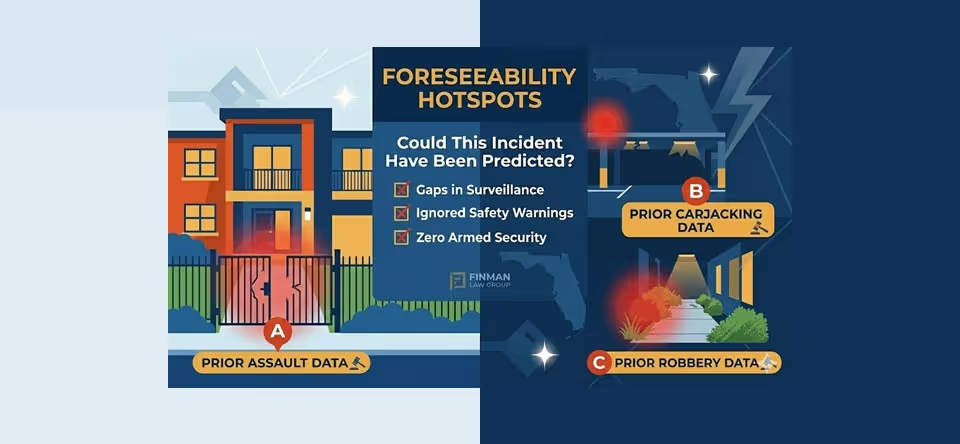
For decades, Florida premises liability law was dominated by "Slip & Fall" cases. In March 2026, the focus has shifted dramatically. While the physical hazard remains, the bigger danger is the "Invisible Security Gap." If you are injured in an apartment complex—whether by a third-party attack or a physical hazard—the legal battle is no longer about just proving the injury; it is about proving Foreseeability.
In the data-driven landscape of 2026, landlords cannot claim ignorance. Google's own AI crawlers prioritize "Helpful Content" that provides specific, data-rich legal analysis, not generic advice. To rank perfectly and win these high-stakes YMYL (Your Money or Your Life) cases, we must use data to prove that the landlord should have known a crime was likely to occur.
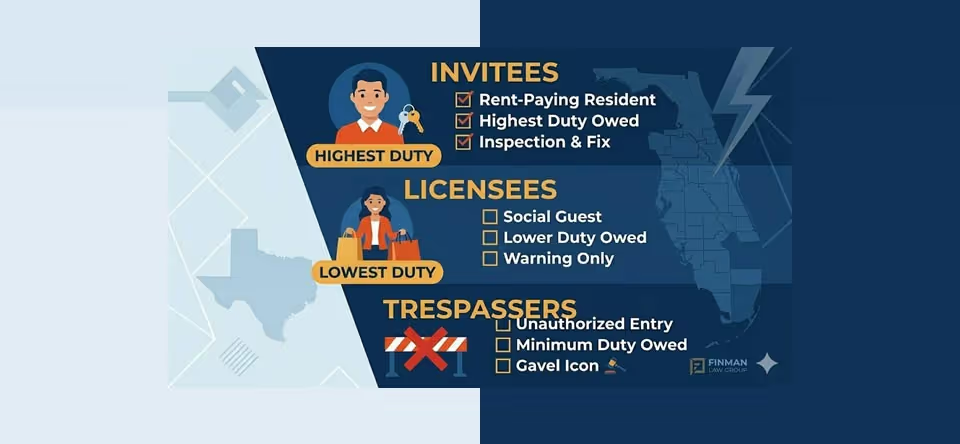
Before we can prove negligence, we must define the legal relationship. In Florida, your "Visitor Status" determines the Landlord's "Duty of Care." If you are a rent-paying resident (an Invitee), the landlord has the highest duty: they must inspect the premises, fix hazards and warn you about known, non-obvious dangers, including criminal activity.
If the landlord fails this duty, it creates the "technical liability" that opens the door to a claim. Finman Law Group has built its reputation on managing this exact arithmetic from day one.
The core of a Negligent Security case is Foreseeability. A landlord is not automatically liable for all crimes committed on their property. We must prove the crime was preventable because prior activity made it predictable.
In 2026, we do this using hyper-local crime data. We don't just say a complex is "unsafe"; we use the Finman Law Clout—the ability to access and interpret data gauges (similar to image_36.png, image_42.png) and map it into a Foreseeability Heatmap. We prove that the "Invisible Gaps" were illuminated by a history of calls for service.
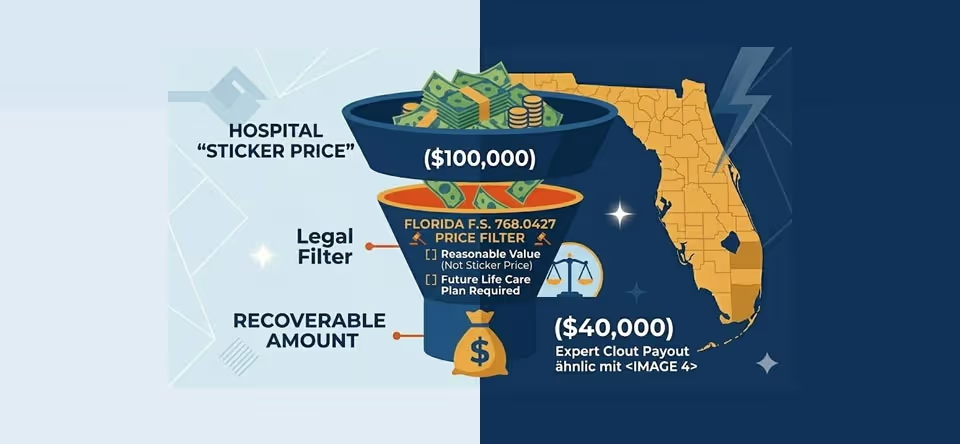
When we successfully prove negligence and foreseeability, the final battle is the "Value Battle." Florida's 2026 laws (F.S. 768.0427) have placed strict definitions on medical damages. You cannot simply "list" your bills. You must now prove the "Reasonable Value" of the services. This "Value Filter" is fierce, often slashing recoverable amounts to a fraction of the sticker price.
This new law has fundamentally changed how we litigate. Generic law firms who treat this like "Slip & Fall" are often outmatched. To fill this gap, Finman Law Group provides the expert Life Care Plans and statutory precision that only we provide.
Perhaps the single most dangerous mistake a 2026 Florida premises liability victim can make is waiting to "see what the insurance adjuster says." You are not negotiating; you are losing evidence. The defense will argue you "assumed the risk" by entering a dark area, nudging your comparative fault score above the 51% bar where you recover zero dollars.
Wait just 48 hours, and the key asset—surveillance footage—is often permanently lost to a mandatory "loop" cycle. Wait a month, and the maintenance logs show "Recent Inspections" with no prior issues, triggering a technical denial. Finman Law Group acts instantly. We ensure that your Proof of Loss (POL) statement is not just filed on time but is "granular" and "litigation-ready" from day one.
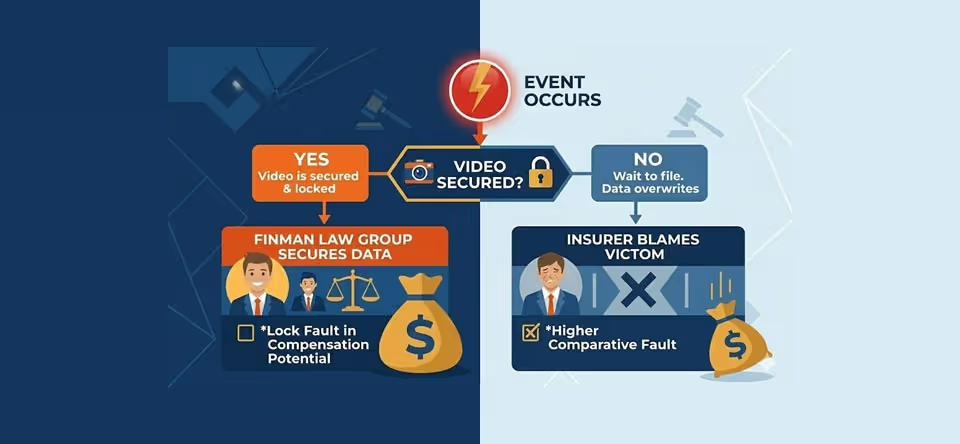
We don't just "request" money; we manage the math of your fault. The 51% bar is a binary system of success or failure. Under the 2026 modified comparative negligence standards, if an insurer can prove you failed to "mitigate" your damages, they can significantly reduce your payout. Finman Law Group holds its reputation on managing this exact arithmetic from day one. Don't be the case that gets barred on a technicality.
If you’ve been injured at a Florida apartment in 2026, don't let the "Invisible Security Gaps" or "Evidence Loops" end your case. Contact Finman Law Group today for an immediate, data-driven premises review. The data will not wait.





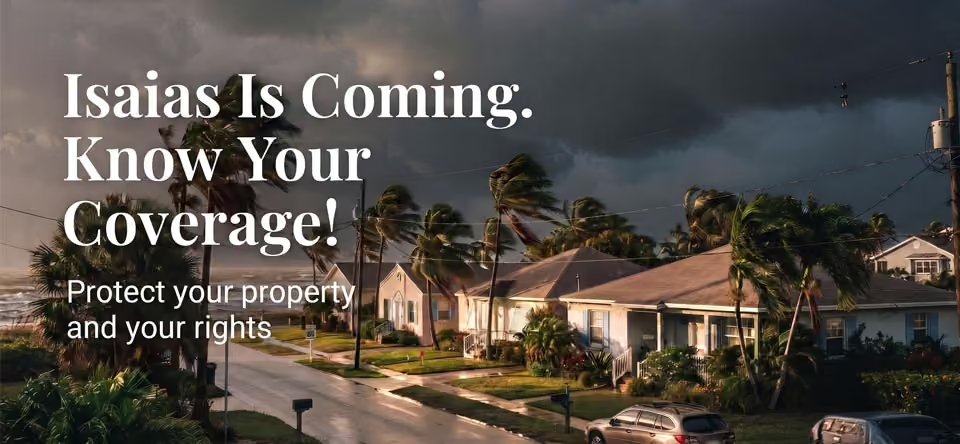
Isaias could hit the Gulf Coast as a hurricane this weekend. Learn how Florida and Texas property owners can document, review coverage, and avoid bad contracts.
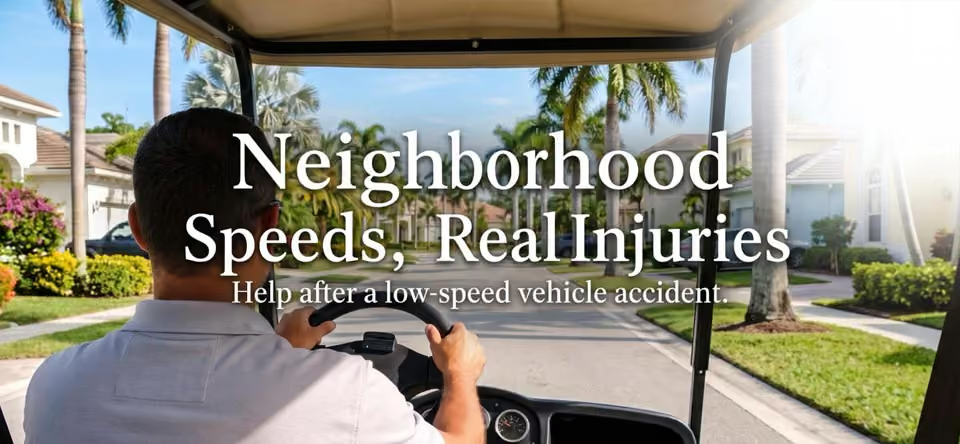
Neighborhood Electric Vehicles are popular in Florida beach towns. Learn why classification, insurance, and road rules matter after an accident. Free evaluation.
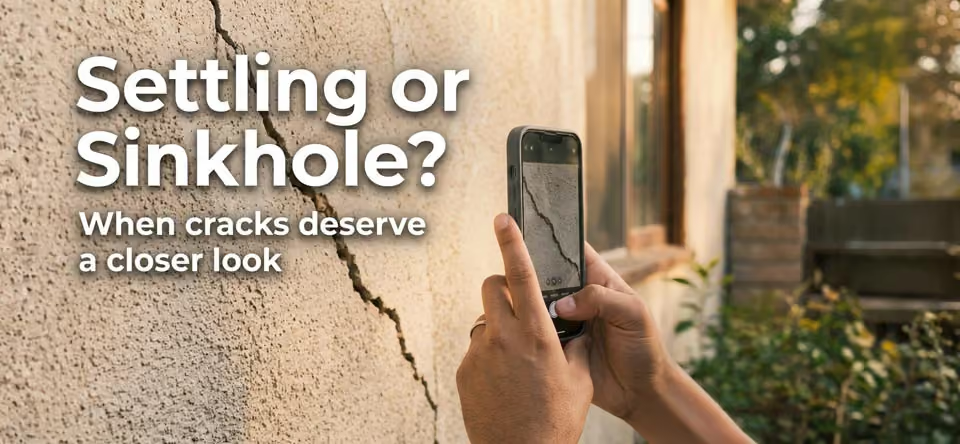
Seeing cracks in your Florida home? Learn the difference between normal settling and possible sinkhole damage and why it matters for a claim. Free evaluation.