What to Do When Your Insurance Company Denies Your Roof Claim

What to Do When Your Insurance Company Denies Your Roof Claim

Article content

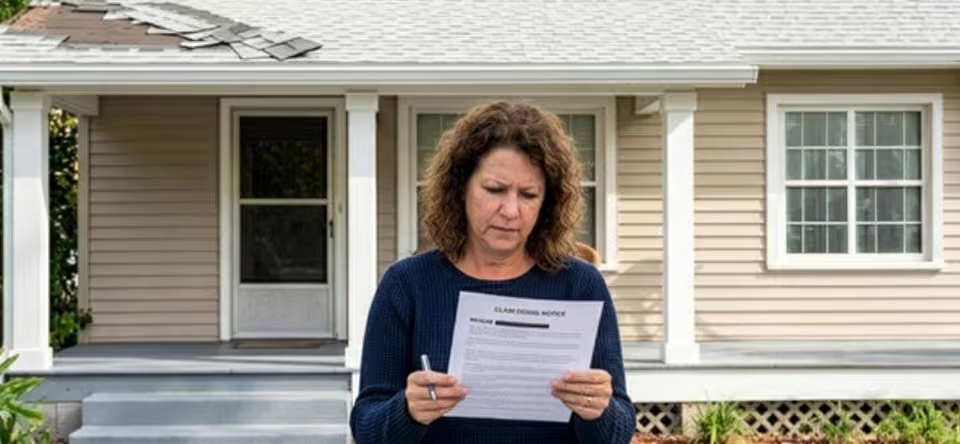
Getting a denial letter from your insurance company after a roof damage claim is one of the more deflating moments a homeowner can go through. You did everything right: you filed in time, you described the damage, and you waited. Then the letter arrived. Denied.

Here's the thing most homeowners don't know: a denial is not a final answer. It's the insurance company's opening position, and it can be challenged.

Why denials happen

Insurance companies deny roof claims for a range of reasons, and not all of them are straightforward. Common explanations include pre-existing damage, normal wear and tear, improper maintenance, or a determination that the storm wasn't severe enough to cause the damage described. Some denials cite specific policy exclusions. Others are vague.

Whatever the reason given, the first step is to read the denial letter carefully and understand exactly what ground the insurer is standing on. That tells you a great deal about how strong their position actually is and where it might have weak points.

Build your documentation now

If your documentation wasn't thorough before the denial, get organized immediately. Gather every photo you took of the damage, every estimate from contractors, any correspondence you had with your insurer, and a written timeline of events from the day the damage occurred through today.

Keep a call log going forward as well. Every time you speak with someone at the insurance company, write down the date, the name of the person you spoke with, and what was discussed. These details can matter more than people expect if the dispute does escalates.

Don't throw anything away. That includes the original claim paperwork, every version of any forms you submitted, and every letter or email you received in response. The paper trail tells a story, and you want to control that story.

Understanding the appeals process

Most insurance policies have a formal internal appeals process, and using it is often the right next step after a denial. An appeal gives you the opportunity to submit additional evidence, challenge the insurer's reasoning, and request a second evaluation of the damage.

Florida and Texas both have state-level insurance regulations that provide homeowners with additional options beyond the appeals process, including appraisal procedures for disputed claims. These protections exist specifically for situations where a homeowner and insurer can't agree on the value or cause of a loss.

What a contractor's opinion can do

One of the most useful things you can do after a denial is get a written assessment from a licensed roofing contractor who is familiar with storm damage. Their documentation of the damage and its likely cause carries real weight, particularly if it contradicts the insurer's adjuster assessment.

If the insurer's adjuster spent 20 minutes on your roof and your contractor spent two hours, that difference in thoroughness can come through clearly in the documentation.

When the process feels too big to handle alone

Roof claims that get denied often involve policy language that's deliberately difficult to interpret, and the appeals process has deadlines and procedural requirements that can trip up homeowners who are navigating it for the first time. There's no shame in recognizing when a situation calls for experienced guidance.

The team at Finman Law Group has worked through countless denied roof claims and understands the tactics insurers use to minimize or avoid payouts. If your claim has been denied and you're not sure what comes next, a conversation with our team can help clarify your options.

Your roof protects everything inside your home. You deserve to have your claim handled fairly.

📞 If your roof damage claim was denied, call Finman Law Group today at (786) 786-9633 or visit finmanlawgroup.com to get started.

Getting a denial letter from your insurance company after a roof damage claim is one of the more deflating moments a homeowner can go through. You did everything right: you filed in time, you described the damage, and you waited. Then the letter arrived. Denied.

Here's the thing most homeowners don't know: a denial is not a final answer. It's the insurance company's opening position, and it can be challenged.

Why denials happen

Insurance companies deny roof claims for a range of reasons, and not all of them are straightforward. Common explanations include pre-existing damage, normal wear and tear, improper maintenance, or a determination that the storm wasn't severe enough to cause the damage described. Some denials cite specific policy exclusions. Others are vague.

Whatever the reason given, the first step is to read the denial letter carefully and understand exactly what ground the insurer is standing on. That tells you a great deal about how strong their position actually is and where it might have weak points.

Build your documentation now

If your documentation wasn't thorough before the denial, get organized immediately. Gather every photo you took of the damage, every estimate from contractors, any correspondence you had with your insurer, and a written timeline of events from the day the damage occurred through today.

Keep a call log going forward as well. Every time you speak with someone at the insurance company, write down the date, the name of the person you spoke with, and what was discussed. These details can matter more than people expect if the dispute does escalates.

Don't throw anything away. That includes the original claim paperwork, every version of any forms you submitted, and every letter or email you received in response. The paper trail tells a story, and you want to control that story.

Understanding the appeals process

Most insurance policies have a formal internal appeals process, and using it is often the right next step after a denial. An appeal gives you the opportunity to submit additional evidence, challenge the insurer's reasoning, and request a second evaluation of the damage.

Florida and Texas both have state-level insurance regulations that provide homeowners with additional options beyond the appeals process, including appraisal procedures for disputed claims. These protections exist specifically for situations where a homeowner and insurer can't agree on the value or cause of a loss.

What a contractor's opinion can do

One of the most useful things you can do after a denial is get a written assessment from a licensed roofing contractor who is familiar with storm damage. Their documentation of the damage and its likely cause carries real weight, particularly if it contradicts the insurer's adjuster assessment.

If the insurer's adjuster spent 20 minutes on your roof and your contractor spent two hours, that difference in thoroughness can come through clearly in the documentation.

When the process feels too big to handle alone

Roof claims that get denied often involve policy language that's deliberately difficult to interpret, and the appeals process has deadlines and procedural requirements that can trip up homeowners who are navigating it for the first time. There's no shame in recognizing when a situation calls for experienced guidance.

The team at Finman Law Group has worked through countless denied roof claims and understands the tactics insurers use to minimize or avoid payouts. If your claim has been denied and you're not sure what comes next, a conversation with our team can help clarify your options.

Your roof protects everything inside your home. You deserve to have your claim handled fairly.

📞 If your roof damage claim was denied, call Finman Law Group today at (786) 786-9633 or visit finmanlawgroup.com to get started.

Additionally Reads

Bicycle Accidents in Florida and Texas: What Every Injured Cyclist Should Know

Bicycle Accidents in Florida and Texas: What Every Injured Cyclist Should Know

Injured in a Florida or Texas bike accident? Learn what steps to take next and explore your compensation options with expert help from Finman Law Group.

Pedestrian Injury Claims in Florida and Texas. What Injured Victims Need to Know

Pedestrian Injury Claims in Florida and Texas. What Injured Victims Need to Know

Learn the essentials of pedestrian injury claims in Florida and Texas. Navigate complex legal systems and protect your rights. Get expert help today.

Protecting Your Property Rights in Post-Storm Florida

Protecting Your Property Rights in Post-Storm Florida

Ensure your property rights in post-storm Florida. Navigate title issues, boundary disputes, and insurance battles with expert guidance. Get legal help today.