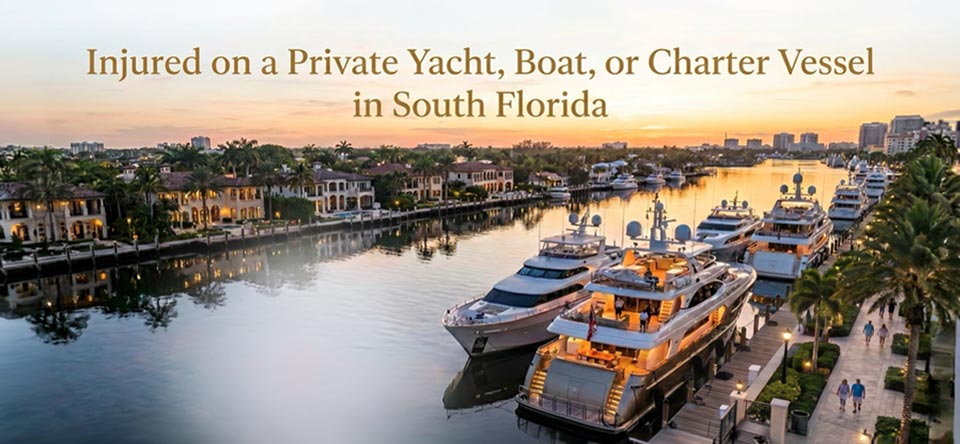
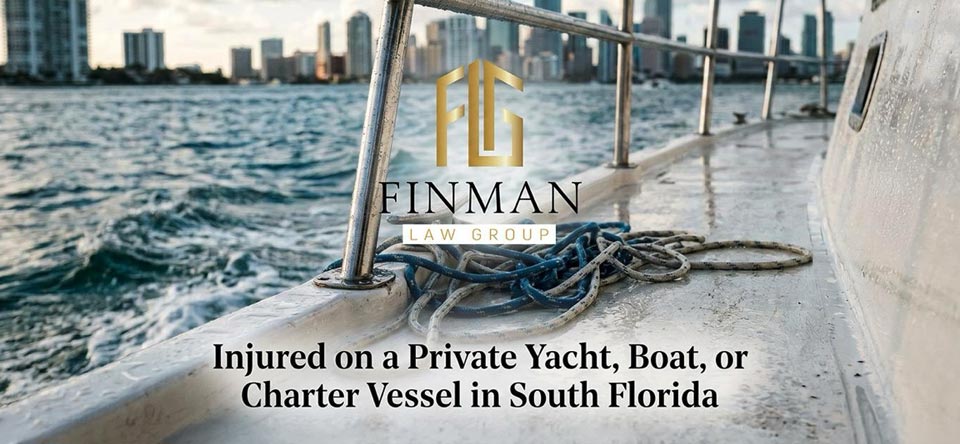
Injured on a Private Yacht, Boat, or Charter Vessel in South Florida

Injured on a Private Yacht, Boat, or Charter Vessel in South Florida

Article content

What passengers should understand about boating injuries from Miami to the Keys

South Florida and boating are inseparable. From the megayachts docked along Fort Lauderdale's Intracoastal Waterway to charter fishing boats leaving Miami's marinas at dawn, from sandbar weekends on Biscayne Bay to island hopping through the Keys, life here happens on the water. Fort Lauderdale alone is known as the Yachting Capital of the World, and on any given weekend, thousands of private yachts, charter vessels, and rental boats share these waterways. It really is a beautiful way to live! But with so many vessels on the water, accidents and injuries are an unfortunate reality, and when they do happen, victims are often left hurting, confused, and may also be unsure of what protections they have as passengers.

How Injuries Happen on the Water

Boating injuries rarely look like what people imagine. Dramatic collisions do occur, but most incidents aboard yachts and charter boats come from far more ordinary circumstances. Common injury scenarios include:

  • Slip and falls on wet decks caused by sea spray, spilled drinks, or surfaces that were never properly maintained
  • Equipment-related injuries from malfunctioning winches, anchors, ladders, or jet skis stored onboard
  • Collisions and sudden stops that cause whiplash, fractures, or head trauma, especially in busy channels and no-wake zones
  • Burns and electrical shocks from faulty galley equipment or generators

There is also a factor unique to our region that many passengers never consider. South Florida's humid climate and saltwater environment are relentless on vessels. Salt corrodes fittings, sun degrades non-skid surfaces, and moisture works into electrical systems year-round. Proper maintenance is not optional here. It’s the difference between a safe vessel and a hazardous one, and when owners or operators let those standards slip, passengers are the ones who may pay the price.

What Passengers Typically Do After an Incident

An injury on the water brings unique challenges. You cannot simply step away from the scene, and medical help may be a boat ride away. Once immediate safety is handled, passengers who have been through these situations tend to focus on preserving a clear record. They document the hazard(s), photographing the wet deck, the failed equipment, or the conditions at the time of the injury, because a vessel's condition can change or be corrected the moment it returns to the dock. They also record their medical treatment carefully, keeping track of symptoms, doctor visits, and rehabilitation needs as recovery unfolds. Noting the vessel's name and registration, the operator's information, and contact details for other passengers who witnessed the incident helps complete that picture while everything is fresh.
Charter Vessels Carry Special Responsibilities

When a family books a sunset cruise out of Haulover Marina or a day charter to the sandbars, they are placing their trust in a commercial operation. Charter companies and professional captains have responsibilities to their passengers that go beyond casual boating between friends, from vessel maintenance to crew training to passenger safety briefings. Most operators in Miami, Fort Lauderdale, and the Keys take that duty seriously. When one does not, and a passenger is hurt as a result, understanding how these situations are typically handled becomes important for the injured person and their family.

Why Awareness Protects Everyone on the Water

Boating injuries can cut a vacation short, create long-term health issues, and can bring real financial strain from medical bills and even missed work. South Florida's charter and yachting industry thrives on trust, and raising awareness of these risks encourages operators to maintain the safety standards passengers deserve. For those who spend time on the water, knowing the common hazards and understanding the value of documentation ensures accountability when something does go wrong. The water is at the heart of life here, and it should be enjoyed safely by everyone aboard.

If you or a loved one was injured on a private yacht, boat, or charter vessel anywhere in South Florida, the caring team at Finman Law Group is here to help you understand your options. Contact us today for a free evaluation of your situation.

What passengers should understand about boating injuries from Miami to the Keys

South Florida and boating are inseparable. From the megayachts docked along Fort Lauderdale's Intracoastal Waterway to charter fishing boats leaving Miami's marinas at dawn, from sandbar weekends on Biscayne Bay to island hopping through the Keys, life here happens on the water. Fort Lauderdale alone is known as the Yachting Capital of the World, and on any given weekend, thousands of private yachts, charter vessels, and rental boats share these waterways. It really is a beautiful way to live! But with so many vessels on the water, accidents and injuries are an unfortunate reality, and when they do happen, victims are often left hurting, confused, and may also be unsure of what protections they have as passengers.

How Injuries Happen on the Water

Boating injuries rarely look like what people imagine. Dramatic collisions do occur, but most incidents aboard yachts and charter boats come from far more ordinary circumstances. Common injury scenarios include:

  • Slip and falls on wet decks caused by sea spray, spilled drinks, or surfaces that were never properly maintained
  • Equipment-related injuries from malfunctioning winches, anchors, ladders, or jet skis stored onboard
  • Collisions and sudden stops that cause whiplash, fractures, or head trauma, especially in busy channels and no-wake zones
  • Burns and electrical shocks from faulty galley equipment or generators

There is also a factor unique to our region that many passengers never consider. South Florida's humid climate and saltwater environment are relentless on vessels. Salt corrodes fittings, sun degrades non-skid surfaces, and moisture works into electrical systems year-round. Proper maintenance is not optional here. It’s the difference between a safe vessel and a hazardous one, and when owners or operators let those standards slip, passengers are the ones who may pay the price.

What Passengers Typically Do After an Incident

An injury on the water brings unique challenges. You cannot simply step away from the scene, and medical help may be a boat ride away. Once immediate safety is handled, passengers who have been through these situations tend to focus on preserving a clear record. They document the hazard(s), photographing the wet deck, the failed equipment, or the conditions at the time of the injury, because a vessel's condition can change or be corrected the moment it returns to the dock. They also record their medical treatment carefully, keeping track of symptoms, doctor visits, and rehabilitation needs as recovery unfolds. Noting the vessel's name and registration, the operator's information, and contact details for other passengers who witnessed the incident helps complete that picture while everything is fresh.

Charter Vessels Carry Special Responsibilities

When a family books a sunset cruise out of Haulover Marina or a day charter to the sandbars, they are placing their trust in a commercial operation. Charter companies and professional captains have responsibilities to their passengers that go beyond casual boating between friends, from vessel maintenance to crew training to passenger safety briefings. Most operators in Miami, Fort Lauderdale, and the Keys take that duty seriously. When one does not, and a passenger is hurt as a result, understanding how these situations are typically handled becomes important for the injured person and their family.

Why Awareness Protects Everyone on the Water

Boating injuries can cut a vacation short, create long-term health issues, and can bring real financial strain from medical bills and even missed work. South Florida's charter and yachting industry thrives on trust, and raising awareness of these risks encourages operators to maintain the safety standards passengers deserve. For those who spend time on the water, knowing the common hazards and understanding the value of documentation ensures accountability when something does go wrong. The water is at the heart of life here, and it should be enjoyed safely by everyone aboard.

If you or a loved one was injured on a private yacht, boat, or charter vessel anywhere in South Florida, the caring team at Finman Law Group is here to help you understand your options. Contact us today for a free evaluation of your situation.

Additionally Reads

Slip-and-Fall Accidents in the Greater Houston Area

Slip-and-Fall Accidents in the Greater Houston Area

Explore common causes and impacts of slip-and-fall accidents in Houston. Learn about risks, prevention, and steps to take if you're injured. Your safety matters!

Car Accident Injuries in Orlando: What Injured Parties Should Know

Car Accident Injuries in Orlando: What Injured Parties Should Know

Discover essential insights on Orlando car accident injuries, common causes, and what steps to take after a crash. Protect yourself and understand your legal options.

Construction Site Injuries in the Greater Houston Area

Construction Site Injuries in the Greater Houston Area

Explore the risks of construction site injuries in Houston. From falls to heat stress, learn how to handle incidents and stay safe in a rapidly growing city.