
Topic:
Personal Injury, Accidents, Slip & Fall
Article content
Those family-sized electric runabouts are everywhere on the coast, and vehicle classification, insurance, and road rules all matter when someone gets hurt
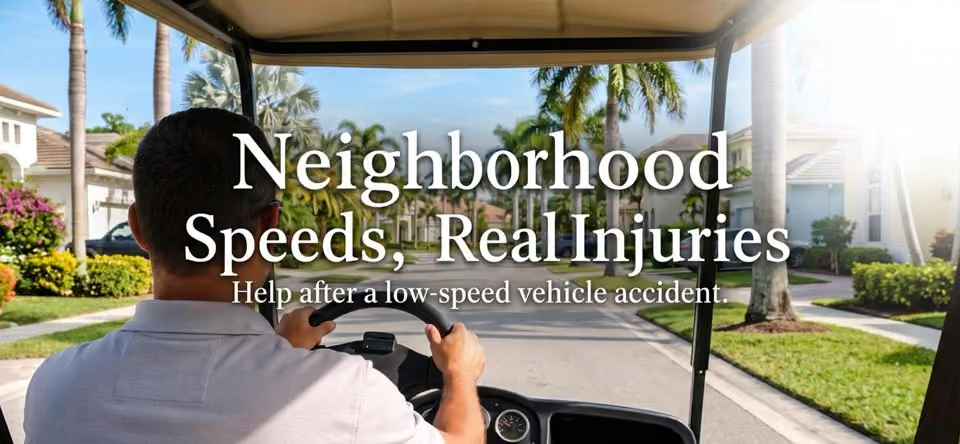
If you spend time around Florida's beach communities, you've probably seen them. They look a little like oversized golf carts, but they come with multiple rows of seats, headlights, seat belts, turn signals, windshields, and enough room for the whole family. They're popular in coastal neighborhoods for good reason, making it easy to reach the beach, restaurants, and parks without taking out the family SUV. These vehicles are often called Neighborhood Electric Vehicles, or NEVs, and depending on their design, they may be classified legally as low-speed vehicles. That distinction sounds technical, but when an accident happens and someone's hurt, it can become very important very quickly.
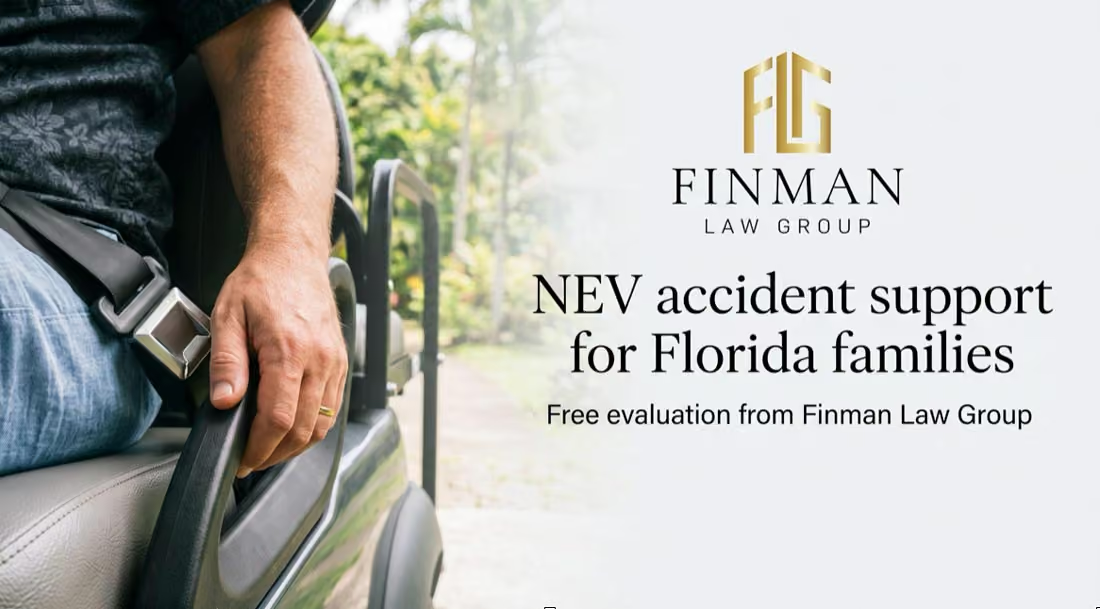
Florida's vehicle laws distinguish low-speed vehicles from traditional golf carts, and the classifications carry different requirements. Florida generally defines a low-speed vehicle as a four-wheeled vehicle capable of speeds greater than 20 miles per hour but not greater than 25, and low-speed vehicles are subject to requirements involving registration, equipment, and where they can be driven. Here's the part that surprises people. The vehicle's appearance alone doesn't determine its legal classification. The family-sized vehicle in a neighbor's driveway may be subject to entirely different rules than a golf cart, and it's risky to assume that because everyone in the neighborhood drives them, every use is automatically legal. Local ordinances and posted roadway rules matter too, especially in communities around Tampa Bay, Pinellas County, Sarasota, Naples, Fort Lauderdale, and Palm Beach County where these vehicles are everywhere.
Imagine a family driving a six-passenger NEV toward the beach when another vehicle pulls out unexpectedly. Or a pedestrian crossing a residential street when an NEV strikes them. Or a passenger injured when the vehicle takes a turn too fast. In the moments afterward, questions arise quickly:
Insurance is often the most tangled piece. Depending on the vehicle type, how it's registered, who owns it, and the circumstances of the accident, different policies may come into play, and it's rarely obvious at the scene which one. That's why nobody should assume the other person's insurance will simply handle everything.
For an injured passenger, pedestrian, or cyclist, the most important thing isn't solving the insurance puzzle at the scene. It's taking care of yourself and preserving the facts. Get medical attention if you're hurt, even if the injuries seem minor, because neighborhood-speed collisions still cause broken bones, head injuries, and back injuries, and symptoms often build over days. Photograph the vehicles and also the surrounding area, get contact information for the driver and any witnesses to what happened, and document the vehicle's make, model, and identifying details if you can. These small steps protect both your health and the truth of what happened.
Passengers sometimes assume they have fewer options because they were riding in the vehicle involved. That's not necessarily the case. A passenger can be injured because another driver was careless, because the NEV was operated improperly, or because of an unsafe condition, and the circumstances matter. The same goes for pedestrians and cyclists too. And because these vehicles are so often family vehicles, children are frequently aboard, which makes safe operation and proper equipment all the more important. A small vehicle can still cause a serious injury, and the people hurt in these accidents deserve the same care and clarity as anyone injured on Florida's roads.
If you or a family member was injured in an accident involving a Neighborhood Electric Vehicle or another low-speed vehicle in Florida, Finman Law Group can review the circumstances and help you understand your options. Contact us today for a free evaluation!





Isaias could hit the Gulf Coast as a hurricane this weekend. Learn how Florida and Texas property owners can document, review coverage, and avoid bad contracts.
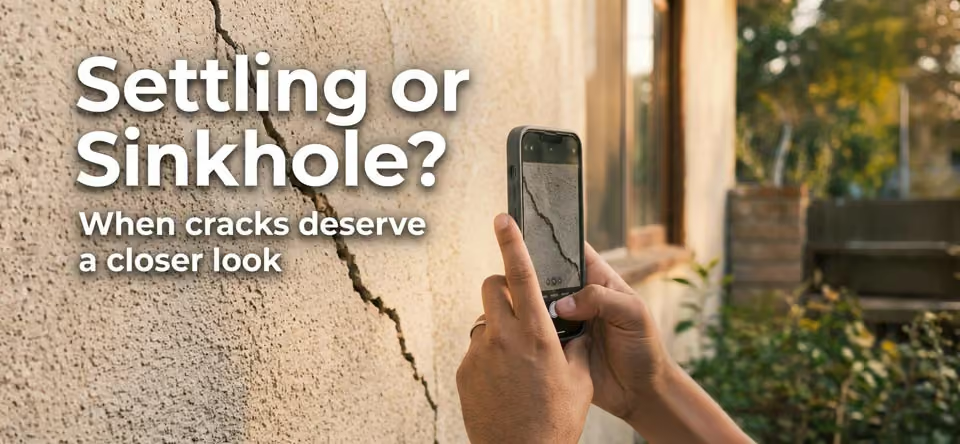
Seeing cracks in your Florida home? Learn the difference between normal settling and possible sinkhole damage and why it matters for a claim. Free evaluation.
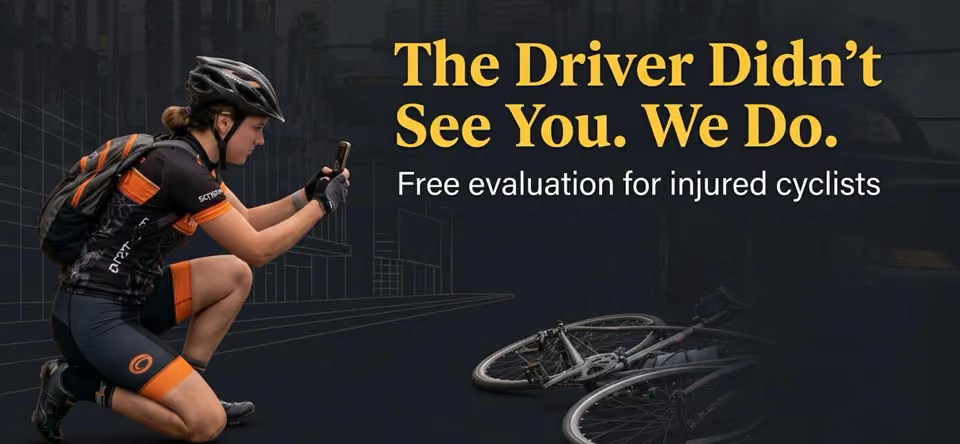
Injured in a bicycle accident in Tampa? Learn what cyclists should do after a crash and what evidence matters. Finman Law Group. Free evaluation.