What Tampa Workers Should Know After a Workplace Injury

What Tampa Workers Should Know After a Workplace Injury

Article content

Workers’ Compensation, Third-party Claims, and the Questions That Decide Which Path Applies

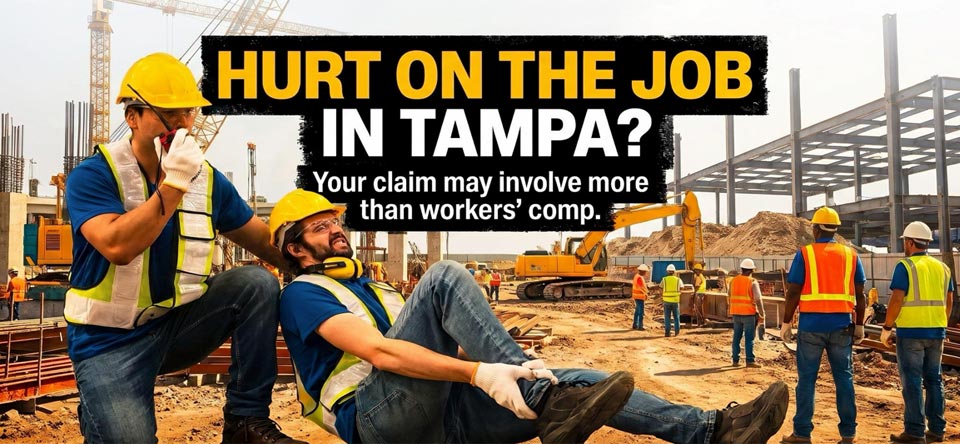
An injury at work can change a person’s routine in a blink of an eye. A fall at a construction site, an accident involving equipment, or unsafe conditions in a commercial building can leave someone facing medical appointments, time away from work, and uncertainty about what may come next. In a busy employment area like Tampa, workplace accidents happen everywhere: construction, transportation, warehouses, hospitality, healthcare, retail, and office settings.

After an accident, injured workers naturally have questions about medical care, lost wages, and who may be responsible. The answers depend on the circumstances of the incident, the employment relationship, and the laws and insurance arrangements in play, and understanding the different types of claims involved is the right starting point.

Workers’ Compensation Is Often Part of the Picture

Florida’s workers’ compensation system generally provides a process for eligible employees who suffer work-related injuries or illnesses. Depending on the circumstances, benefits can include authorized medical treatment and partial wage replacement while an employee can’t work or has restrictions.

Workers’ compensation is a different animal from a traditional negligence lawsuit, and in many situations it’s the primary route for benefits after an on-the-job injury. The specific benefits, deadlines, medical authorization requirements, and dispute procedures depend on the facts and the governing rules. And not everyone who performs work is necessarily classified as an employee for these purposes. Questions about employee status, independent contractor arrangements, subcontracting, and even who the employer actually is can complicate a situation, so no workplace injury should be assumed to fit neatly into one category without a careful look at the details.
When Someone Other Than the Employer Is Involved

Some workplace accidents involve a person or company outside the injured worker’s employer, and that changes the landscape. For example:

  • A delivery driver is hurt in a collision caused by another motorist during a work trip
  • A subcontractor is injured by an unsafe condition created by a separate contractor on the same site
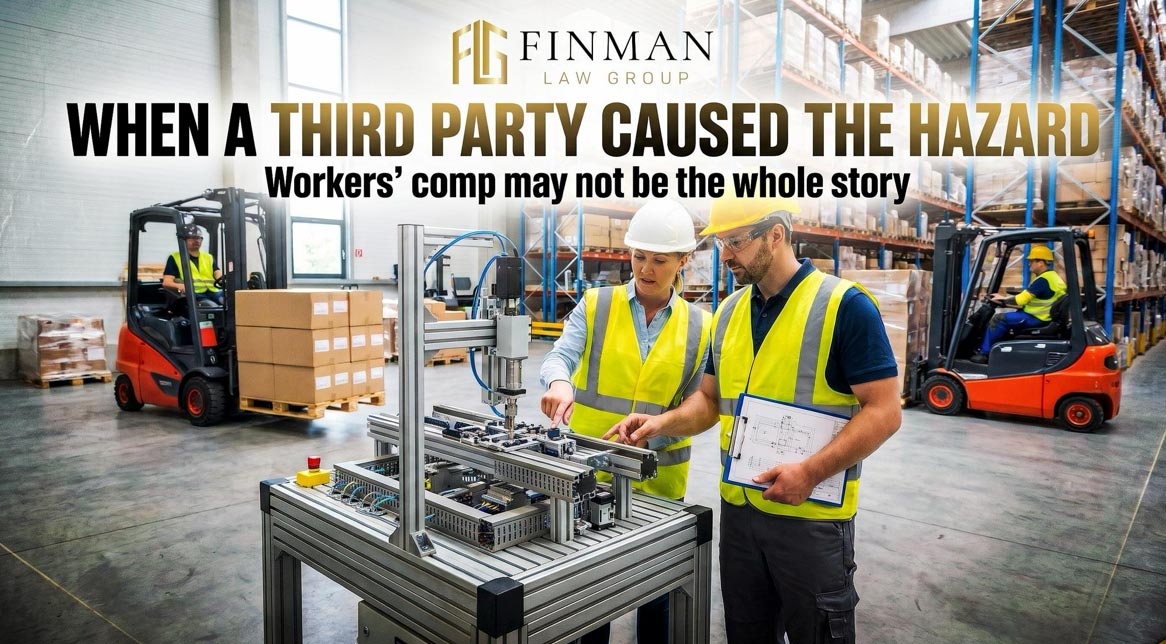
  • A worker is hurt by defective machinery, tools, or equipment supplied or maintained by another business

Depending on the facts, an injured person may have a potential third-party personal injury claim alongside a workers’ compensation case. These claims aren’t automatic. They turn on who controlled the hazard, whether a duty was owed, whether negligence or a product defect contributed, and how the injury happened. The distinction carries real weight, because a third-party claim is legally different from workers’ compensation, with different parties, insurance policies, damages, and legal questions. The existence of one type of claim doesn’t by itself establish the availability or outcome of the other.

Common Workplace Accident Scenarios in Tampa

Construction workers face falls, falling materials, and equipment incidents. Warehouse employees deal with forklifts, unstable storage, and loading operations. Drivers and delivery workers live with roadway risks every shift, restaurant and hotel employees navigate wet floors, hot surfaces, and aging equipment, and even office and retail workers get hurt by trip hazards, falling objects, and possibly poorly maintained premises.

The setting alone never determines responsibility, though. A fall at a job site can involve the employer’s workers’ compensation coverage, a property owner, a general contractor, a subcontractor, or another party entirely. The details of the work arrangement and the cause of the accident decide where things land.

Why the Circumstances Carry So Much Weight

Workplace injury cases turn on specific facts: the location, the task being performed, the equipment involved, and which businesses were present. The relationships between the injured worker and the people or companies whose conduct contributed all come into play. Medical records describe the injury and treatment, employment and incident records clarify the work being performed, and in third-party situations, contracts, maintenance responsibilities, safety procedures, and insurance arrangements become relevant too. No single document tells the whole story; the legal questions depend on how the evidence fits together and which laws apply.

Tampa Workers Have Somewhere to Turn

A workplace accident can involve more than one insurance process, and the relationship between them can get complex quickly. Finman Law Group represents individuals in personal injury cases and can evaluate whether the circumstances of a workplace accident raise issues involving a potentially responsible third party, review the facts, and explain the legal questions that apply.

If you or a family member was injured in a workplace accident in the Tampa area, contact Finman Law Group for a free evaluation of your case today!‍

Workers’ Compensation, Third-party Claims, and the Questions That Decide Which Path Applies

An injury at work can change a person’s routine in a blink of an eye. A fall at a construction site, an accident involving equipment, or unsafe conditions in a commercial building can leave someone facing medical appointments, time away from work, and uncertainty about what may come next. In a busy employment area like Tampa, workplace accidents happen everywhere: construction, transportation, warehouses, hospitality, healthcare, retail, and office settings.

After an accident, injured workers naturally have questions about medical care, lost wages, and who may be responsible. The answers depend on the circumstances of the incident, the employment relationship, and the laws and insurance arrangements in play, and understanding the different types of claims involved is the right starting point.

Workers’ Compensation Is Often Part of the Picture

Florida’s workers’ compensation system generally provides a process for eligible employees who suffer work-related injuries or illnesses. Depending on the circumstances, benefits can include authorized medical treatment and partial wage replacement while an employee can’t work or has restrictions.

Workers’ compensation is a different animal from a traditional negligence lawsuit, and in many situations it’s the primary route for benefits after an on-the-job injury. The specific benefits, deadlines, medical authorization requirements, and dispute procedures depend on the facts and the governing rules. And not everyone who performs work is necessarily classified as an employee for these purposes. Questions about employee status, independent contractor arrangements, subcontracting, and even who the employer actually is can complicate a situation, so no workplace injury should be assumed to fit neatly into one category without a careful look at the details.

When Someone Other Than the Employer Is Involved

Some workplace accidents involve a person or company outside the injured worker’s employer, and that changes the landscape. For example:

  • A delivery driver is hurt in a collision caused by another motorist during a work trip
  • A subcontractor is injured by an unsafe condition created by a separate contractor on the same site
  • A worker is hurt by defective machinery, tools, or equipment supplied or maintained by another business

Depending on the facts, an injured person may have a potential third-party personal injury claim alongside a workers’ compensation case. These claims aren’t automatic. They turn on who controlled the hazard, whether a duty was owed, whether negligence or a product defect contributed, and how the injury happened. The distinction carries real weight, because a third-party claim is legally different from workers’ compensation, with different parties, insurance policies, damages, and legal questions. The existence of one type of claim doesn’t by itself establish the availability or outcome of the other.

Common Workplace Accident Scenarios in Tampa

Construction workers face falls, falling materials, and equipment incidents. Warehouse employees deal with forklifts, unstable storage, and loading operations. Drivers and delivery workers live with roadway risks every shift, restaurant and hotel employees navigate wet floors, hot surfaces, and aging equipment, and even office and retail workers get hurt by trip hazards, falling objects, and possibly poorly maintained premises.

The setting alone never determines responsibility, though. A fall at a job site can involve the employer’s workers’ compensation coverage, a property owner, a general contractor, a subcontractor, or another party entirely. The details of the work arrangement and the cause of the accident decide where things land.

Why the Circumstances Carry So Much Weight

Workplace injury cases turn on specific facts: the location, the task being performed, the equipment involved, and which businesses were present. The relationships between the injured worker and the people or companies whose conduct contributed all come into play. Medical records describe the injury and treatment, employment and incident records clarify the work being performed, and in third-party situations, contracts, maintenance responsibilities, safety procedures, and insurance arrangements become relevant too. No single document tells the whole story; the legal questions depend on how the evidence fits together and which laws apply.

Tampa Workers Have Somewhere to Turn

A workplace accident can involve more than one insurance process, and the relationship between them can get complex quickly. Finman Law Group represents individuals in personal injury cases and can evaluate whether the circumstances of a workplace accident raise issues involving a potentially responsible third party, review the facts, and explain the legal questions that apply.

If you or a family member was injured in a workplace accident in the Tampa area, contact Finman Law Group for a free evaluation of your case today!‍

Additionally Reads

When an Insurer Underpays Your Miami-Dade Property Claim

When an Insurer Underpays Your Miami-Dade Property Claim

Why property insurance claims come back underpaid across Miami-Dade, from Brickell and Miami Beach condos to homes in Hialeah, Kendall, and Homestead, and when a legal review of your settlement helps.
What Injured Motorcycle Riders in Orlando Should Know

What Injured Motorcycle Riders in Orlando Should Know

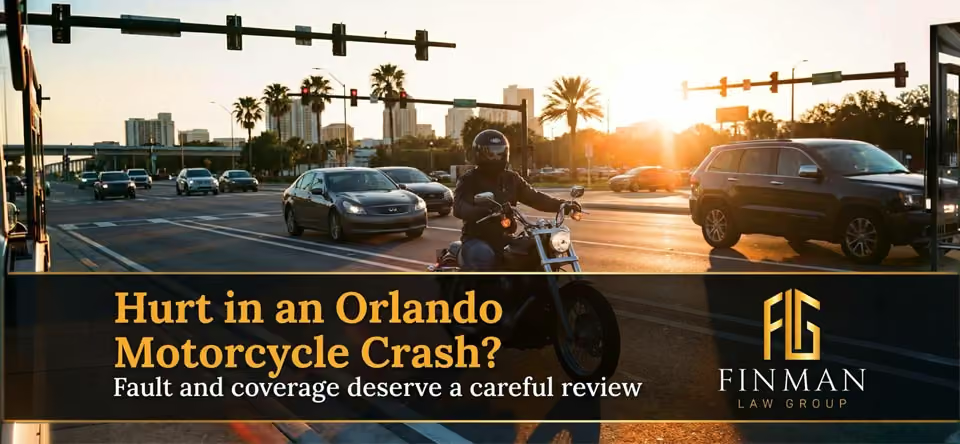
Learn what injured motorcycle riders in Orlando and Central Florida should know, from common crash causes on I-4 and busy tourist corridors to liability, insurance coverage, and injury claims.
When a Dangerous Sidewalk Causes a Fall in Tampa

When a Dangerous Sidewalk Causes a Fall in Tampa

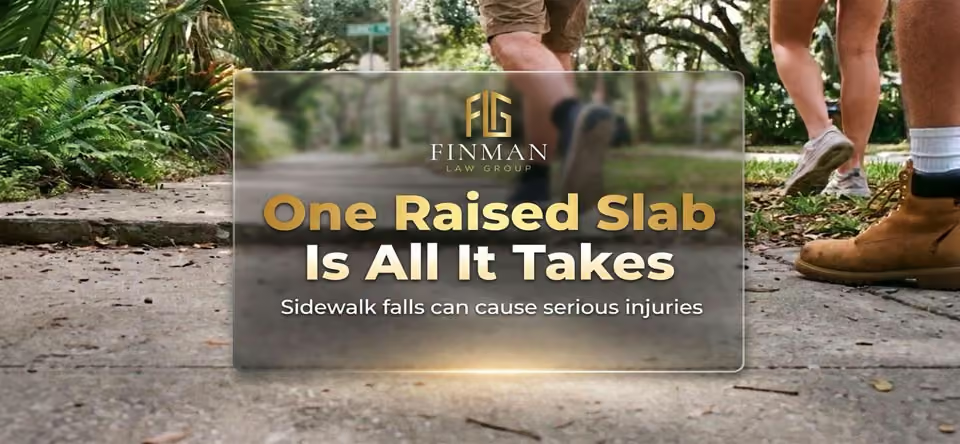
How sidewalk conditions, maintenance responsibilities, and the circumstances of a fall factor into a Tampa personal injury claim.