

Topic:
Property & Casualty
Article content
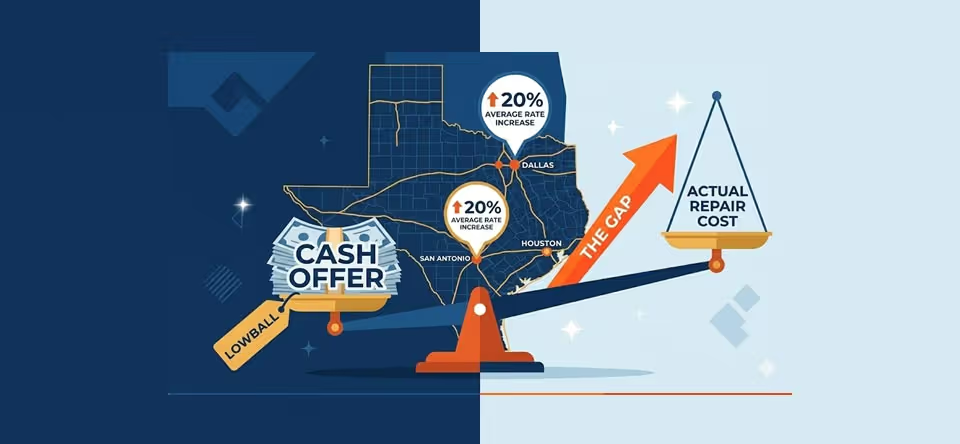
Texas homeowners are currently facing some of the steepest insurance premiums in the United States. In early 2026, many Texans saw renewal notices with rate hikes exceeding 20%, driven by record-breaking hail events and rising reconstruction costs.
However, the bigger issue isn't just the premium—it's the payout. Insurance companies are increasingly using "aggressive depreciation" to lower their settlement offers. But as of January 1, 2026, a new tool is back in your hands: Mandatory Binding Appraisal (SB 458).
Prior to 2026, some insurers began removing the "Appraisal Clause" from policies, forcing homeowners into expensive litigation just to prove the value of their roof. The Texas Legislature ended this practice with SB 458.
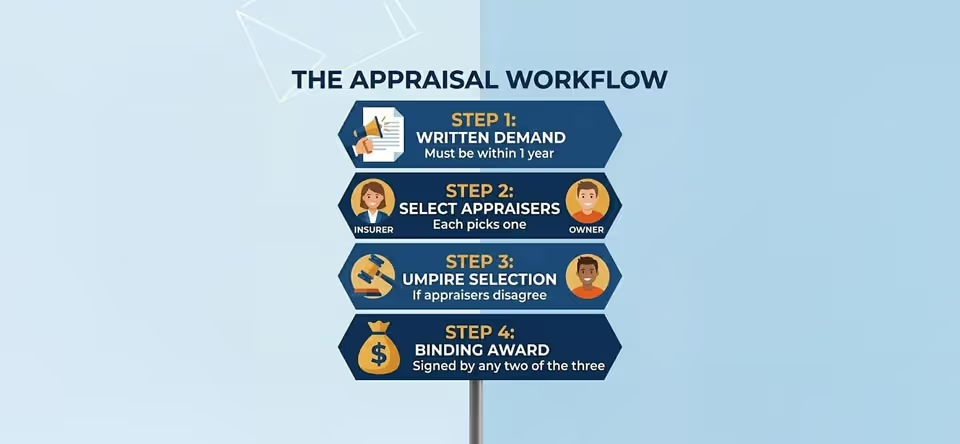
Now, almost every residential policy in Texas must include a binding appraisal provision. If you and your insurer disagree on the amount of loss, you can unilaterally demand an appraisal. This is a massive win for policyholders, as it bypasses the court system and puts the decision in the hands of independent experts.
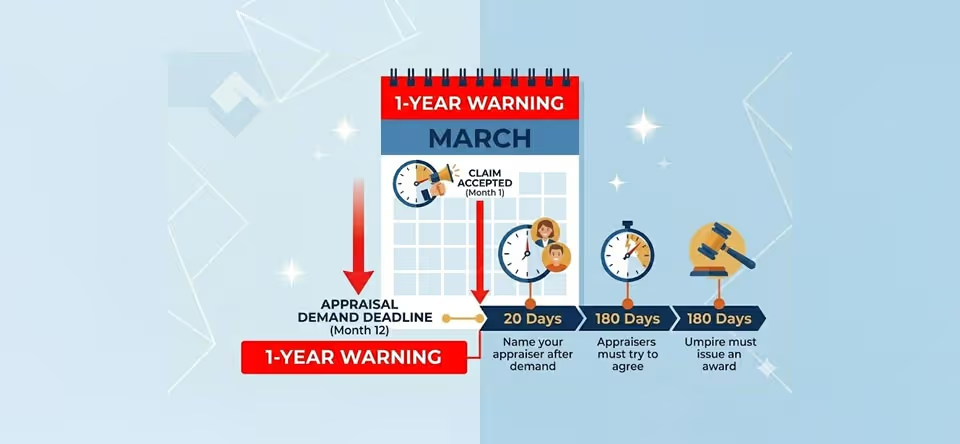
A critical "trap" in the 2026 Texas law is the new timeline. Under SB 458, a demand for appraisal must be made within one year from the date the insurer gives you notice that they have accepted coverage.
If you spend 13 months trying to negotiate "nicely" with an adjuster who keeps lowballing you, you may find yourself legally barred from invoking the appraisal clause. At Finman Law Group, we recommend invoking appraisal as soon as negotiations stall to preserve your rights.
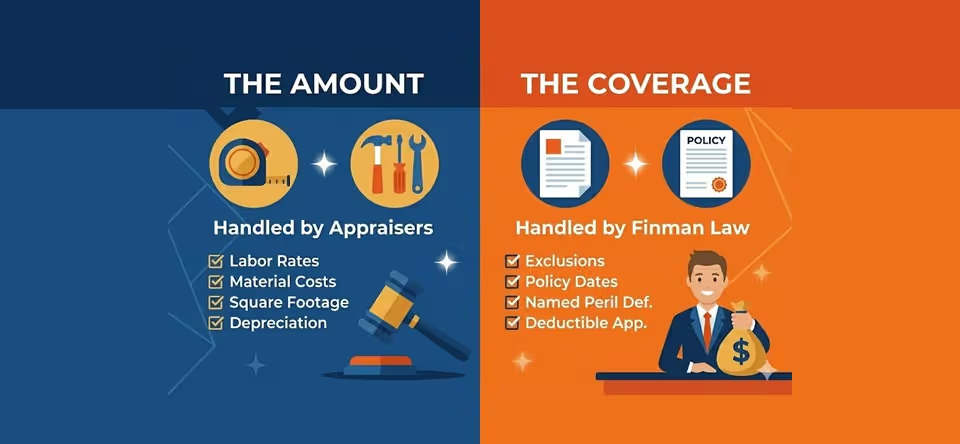
It is vital to understand what an appraisal cannot do. In Texas, appraisers determine the value of the damage, not whether the damage is covered.
Often, insurers try to stop an appraisal by claiming the damage isn't covered. We specialize in forcing insurers to separate these issues so you can get a binding number on your damages while we fight the coverage battle in court.
The 2026 rules have tightened the qualifications for who can serve as an appraiser. They must be competent and impartial. Many homeowners make the mistake of hiring a contractor who doesn't understand the legal nuances of an "Appraisal Award."
An award signed by an umpire and an appraiser is nearly impossible for an insurance company to overturn in court. It is essentially a final judgment on the value of your claim.
[INSERT IMAGE 5: The "Unfair Fight" Visual]
Whether you are in the hail-prone regions of North Texas or dealing with hurricane fallout on the Gulf Coast, Finman Law Group provides the legal backbone for your appraisal. We ensure your appraiser is qualified, the umpire is truly neutral, and the final award is legally enforceable.
If your Texas property claim is being underpaid, don't wait for the one-year clock to run out. Contact Finman Law Group today.






Isaias could hit the Gulf Coast as a hurricane this weekend. Learn how Florida and Texas property owners can document, review coverage, and avoid bad contracts.

Neighborhood Electric Vehicles are popular in Florida beach towns. Learn why classification, insurance, and road rules matter after an accident. Free evaluation.
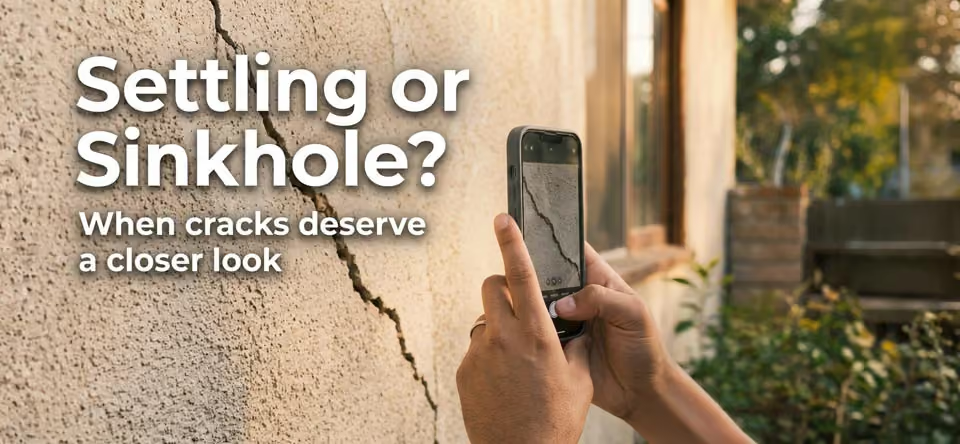
Seeing cracks in your Florida home? Learn the difference between normal settling and possible sinkhole damage and why it matters for a claim. Free evaluation.