Heavy Metal: Navigating Texas Trucking Accidents and the HB 19 "Bifurcated" Trial

Heavy Metal: Navigating Texas Trucking Accidents and the HB 19 "Bifurcated" Trial

Article content

The 2026 Reality of Texas Trucking Litigation

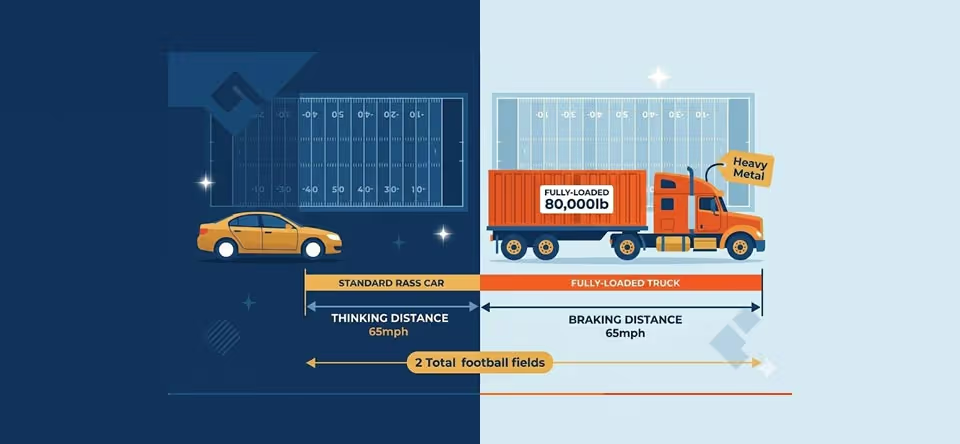
In 2026, Texas remains the nation's leader in commercial vehicle traffic—and unfortunately, in trucking accidents. However, the legal landscape for victims has shifted dramatically. If you are involved in a collision with an 18-wheeler, you aren't just fighting a driver; you are fighting a sophisticated legal shield known as House Bill 19 (HB 19).

At Finman Law Group, we specialize in deconstructing this shield. HB 19 was designed to protect trucking companies from "frivolous" suits, but in practice, it often creates a procedural maze that hides corporate negligence from the jury.

Understanding the "Bifurcated" Trial: Phase 1 vs. Phase 2

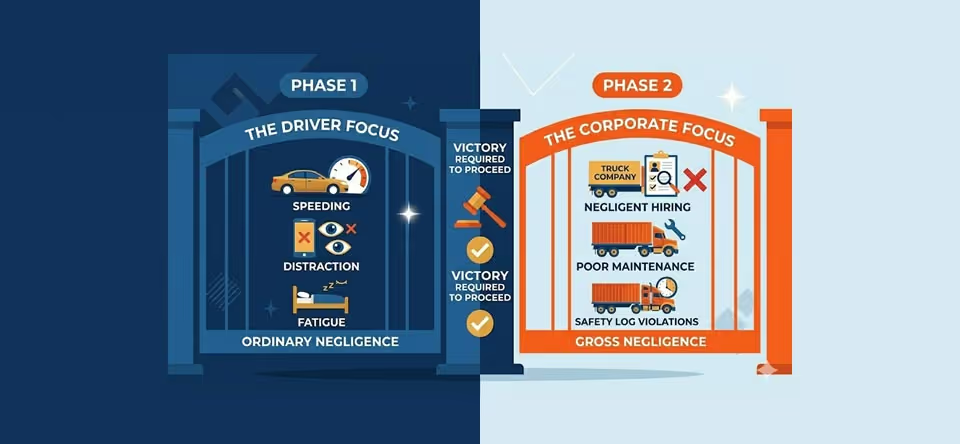
The most significant hurdle under Texas law is the Bifurcated Trial. This means your case is essentially split into two separate trials.

In Phase 1, you are only allowed to present evidence regarding the driver's actions at the time of the crash. You are largely barred from mentioning the trucking company’s history of safety violations or poor hiring practices. Only if you win Phase 1 can you move to Phase 2, where we can finally hold the corporation accountable for their systemic failures.
The Black Box: Using ELD Data to Win Phase 1

Since the 2026 mandates on Electronic Logging Devices (ELDs) have tightened, the "Black Box" is now our most powerful weapon. In Phase 1, we must prove the driver was negligent. We do this by pulling digital data that shows:
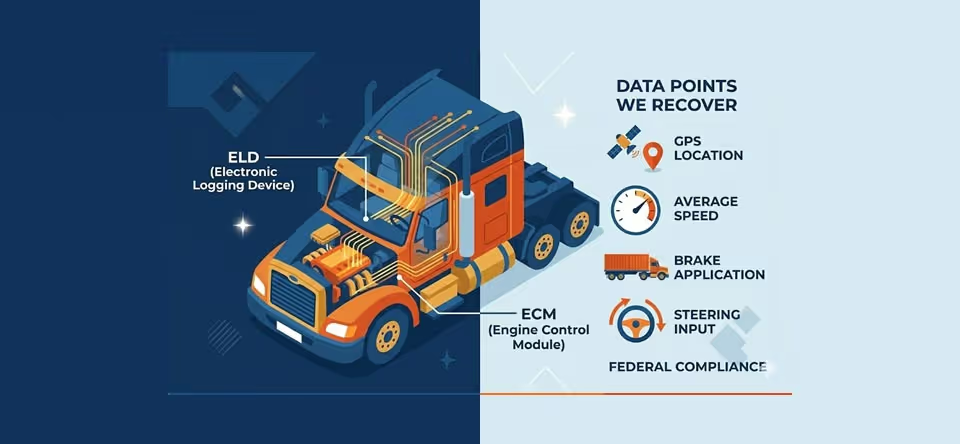
  • Hours of Service (HOS) Violations: Was the driver "running hot" past legal limits?
  • Sudden Braking Events: Did the truck’s sensors record a lack of attention?
  • Speeding History: Was the driver consistently over the limit leading up to the impact?

Negligent Hiring: The Phase 2 Battleground

If we successfully prove the driver was at fault, we move to Phase 2 to seek Exemplary (Punitive) Damages. This is where we look at the company's "Gross Negligence." Did they hire a driver with three previous DUIs? Did they skip mandatory brake inspections to save money? In Texas, holding the "Deep Pockets" accountable requires proving the company knew about a risk and ignored it.
The 51% Bar: Texas Comparative Fault

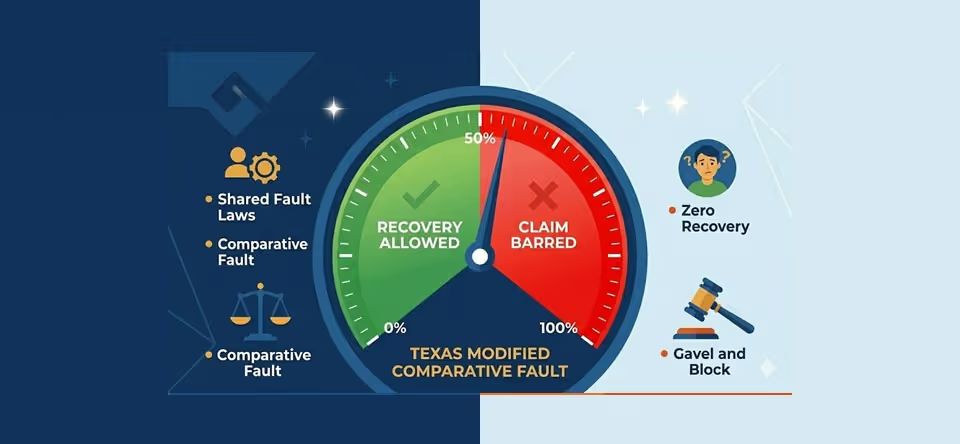
Texas follows a Modified Comparative Fault rule. If a jury decides you were 51% or more responsible for the accident (for example, if you were speeding when the truck cut you off), you recover zero dollars. If you are 20% at fault, your check is reduced by 20%. The trucking company’s lawyers will spend the entire trial trying to push your percentage above that 51% line.
Why Finman Law Group for Texas Trucking Claims?

Winning a trucking case in 2026 requires an attorney who understands the Federal Motor Carrier Safety Regulations (FMCSR) as well as the local Texas courtroom tactics. We don't just wait for Phase 2; we build the corporate pressure from the very first deposition.

If you’ve been hit by a commercial vehicle in Texas, don't let HB 19 hide the truth. Contact Finman Law Group for a free, aggressive case evaluation.

The 2026 Reality of Texas Trucking Litigation

In 2026, Texas remains the nation's leader in commercial vehicle traffic—and unfortunately, in trucking accidents. However, the legal landscape for victims has shifted dramatically. If you are involved in a collision with an 18-wheeler, you aren't just fighting a driver; you are fighting a sophisticated legal shield known as House Bill 19 (HB 19).

At Finman Law Group, we specialize in deconstructing this shield. HB 19 was designed to protect trucking companies from "frivolous" suits, but in practice, it often creates a procedural maze that hides corporate negligence from the jury.

Understanding the "Bifurcated" Trial: Phase 1 vs. Phase 2

The most significant hurdle under Texas law is the Bifurcated Trial. This means your case is essentially split into two separate trials.

In Phase 1, you are only allowed to present evidence regarding the driver's actions at the time of the crash. You are largely barred from mentioning the trucking company’s history of safety violations or poor hiring practices. Only if you win Phase 1 can you move to Phase 2, where we can finally hold the corporation accountable for their systemic failures.

The Black Box: Using ELD Data to Win Phase 1

Since the 2026 mandates on Electronic Logging Devices (ELDs) have tightened, the "Black Box" is now our most powerful weapon. In Phase 1, we must prove the driver was negligent. We do this by pulling digital data that shows:

  • Hours of Service (HOS) Violations: Was the driver "running hot" past legal limits?
  • Sudden Braking Events: Did the truck’s sensors record a lack of attention?
  • Speeding History: Was the driver consistently over the limit leading up to the impact?

Negligent Hiring: The Phase 2 Battleground

If we successfully prove the driver was at fault, we move to Phase 2 to seek Exemplary (Punitive) Damages. This is where we look at the company's "Gross Negligence." Did they hire a driver with three previous DUIs? Did they skip mandatory brake inspections to save money? In Texas, holding the "Deep Pockets" accountable requires proving the company knew about a risk and ignored it.

The 51% Bar: Texas Comparative Fault

Texas follows a Modified Comparative Fault rule. If a jury decides you were 51% or more responsible for the accident (for example, if you were speeding when the truck cut you off), you recover zero dollars. If you are 20% at fault, your check is reduced by 20%. The trucking company’s lawyers will spend the entire trial trying to push your percentage above that 51% line.

Why Finman Law Group for Texas Trucking Claims?

Winning a trucking case in 2026 requires an attorney who understands the Federal Motor Carrier Safety Regulations (FMCSR) as well as the local Texas courtroom tactics. We don't just wait for Phase 2; we build the corporate pressure from the very first deposition.

If you’ve been hit by a commercial vehicle in Texas, don't let HB 19 hide the truth. Contact Finman Law Group for a free, aggressive case evaluation.

Additionally Reads

Disputing Your Texas Property Appraisal: The 2026 Surge

Disputing Your Texas Property Appraisal: The 2026 Surge

Texas insurance rates are up 20%. Learn how to use the mandatory 2026 appraisal clause to dispute lowball payouts and fight for a fair property settlement.

Florida Modified Comparative Fault Law 51% Bar | Finman Law

Florida Modified Comparative Fault Law 51% Bar | Finman Law

In 2026, Florida's 51% fault rule means one mistake can end your personal injury claim. Don’t wait for the defense to build their case. Learn how Finman Law Group locks in your right to compensation.

Beyond the Slip: The High Stakes of 2026 Florida Apartment Security and Foreseeability

Beyond the Slip: The High Stakes of 2026 Florida Apartment Security and Foreseeability

Injured at a Florida apartment in 2026? Learn how to prove Landlord Negligence using 'Foreseeability' data and how Finman Law Group locks fault at 20%