Florida Modified Comparative Fault Law 51% Bar | Finman Law

Florida Modified Comparative Fault Law 51% Bar | Finman Law

Article content

The 2026 Reality: Florida's "Ticking Liability Bomb"

In 2026, personal injury litigation in Florida has become an absolute minefield for the unrepresented. The legal landscape has shifted from compensating victims to finding reasons to deny them. If you are injured in a slip and fall or a vehicle accident, you aren't fighting for "fairness"—you are fighting a ticking liability clock that the insurance company is trying to push into the red zone.

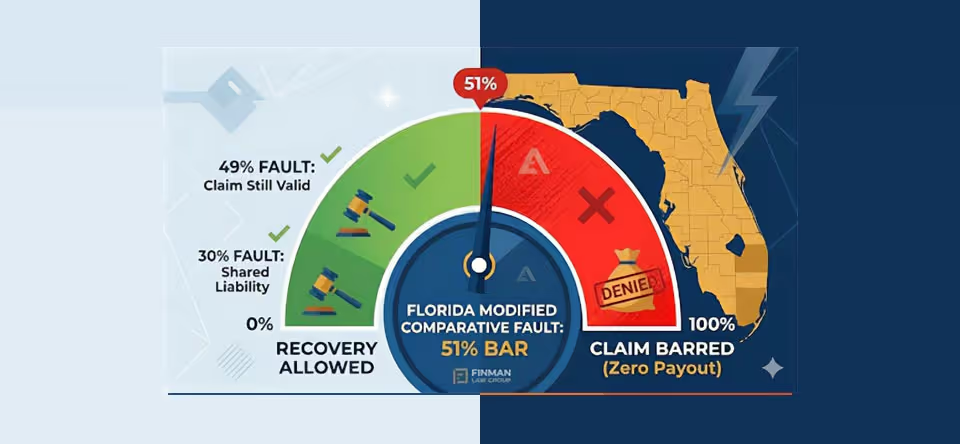
Today, Florida operates under a strict Modified Comparative Fault system, a law fully mature as of March 2026. This created the devastating "51% Bar." If a jury finds you just 1% more responsible for your own injuries than the other party, your recovery is instantly set to zero. The era of recovering "some compensation" while partially at fault is over.

The Insurance "Distraction Trap": Why Your First Statement is a Minefield

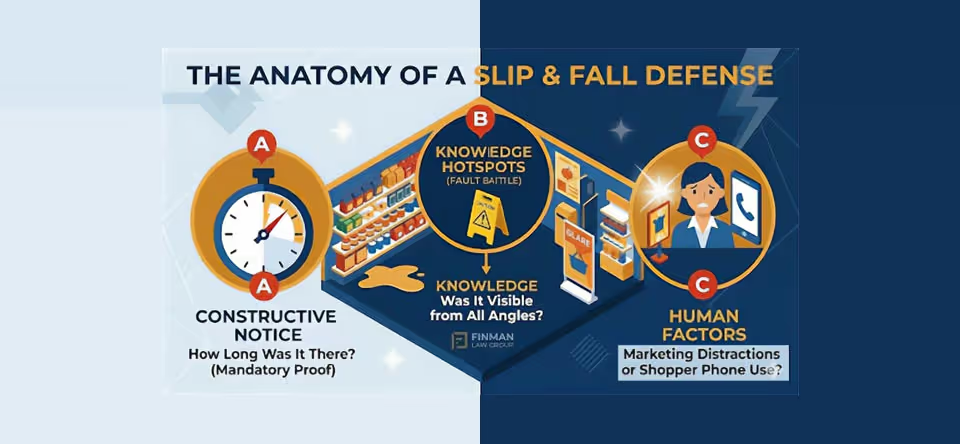
In 2026, insurance adjusters are not "investigating" your claim; they are searching for comparative negligence triggers. They are trained to trap you into admissions of fault. A single generic answer like "I might have been looking at my phone" is the golden ticket they need. They will cross-reference that statement with social media timestamps and cell data to nudging your fault score.

Every slip and fall case, especially in high-traffic South Florida retail settings, is instantly defined by the "Distraction Trap." Don't fall into it.
The 2026 Settlement "Price Filter": Don't Settle for Sticker Shock

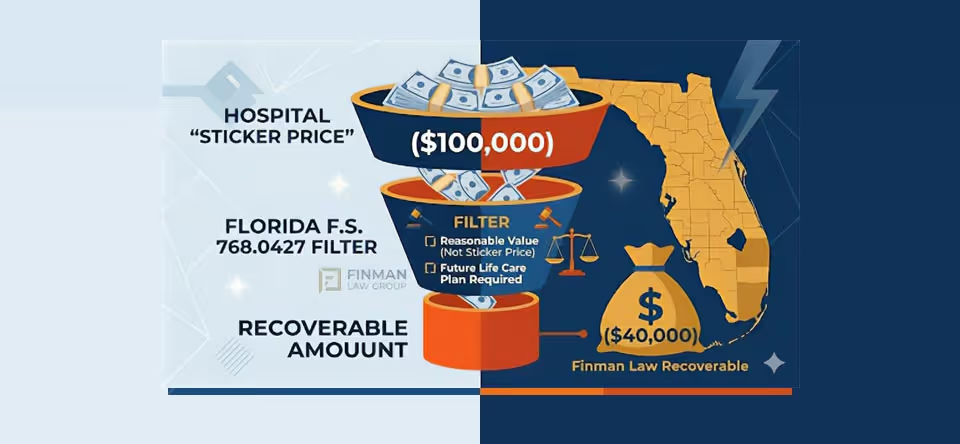
When we win the "Fault Battle," the next challenge is the "Value Battle." The 2026 legal standard in Florida (F.S. 768.0427) has made calculating damages a specialized legal exercise. You can no longer just submit your hospital bills. You must now prove the "Reasonable Value" of the services.

In 2026, the "Price Filter" is fierce. The hospital's inflated "Sticker Price" is often slashed to a fraction of the recoverable amount based on new mandatory billing schedules.
The Rise of "Data-Driven Foreseeability" in Apartment Security Claims

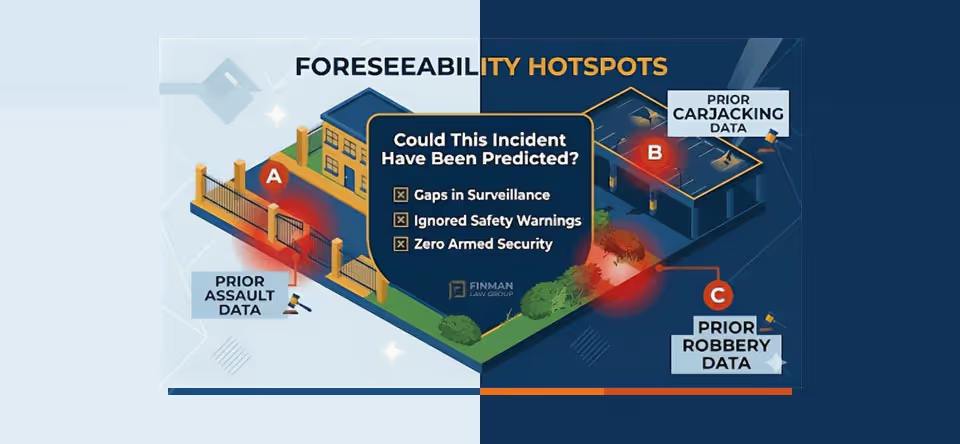
For residents in Florida apartment complexes, personal injury often involves a component of Negligent Security. If you were harmed in a parking garage with broken locks, you cannot simply blame the landlord. The 51% Bar still applies. The defense will argue you "assumed the risk" of walking into a dark area.

We fight this by defining Foreseeability. We don't just say the area was dangerous; we prove the landlord knew or should have known it was dangerous using concrete data.
The "Evidence Loop" FOMO: Why Waits Lose Cases

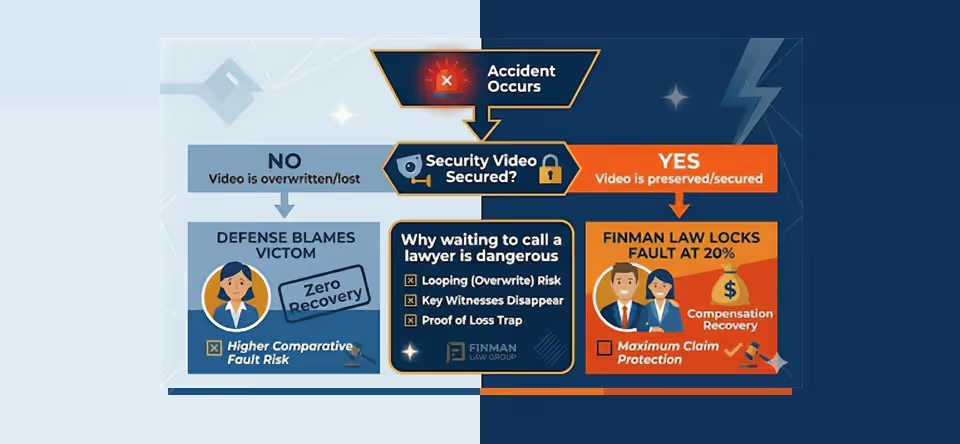
Perhaps the single most dangerous mistake a 2026 Florida injury victim can make is waiting to "see what the insurance adjuster says." You are not negotiating; you are losing evidence. Every hour you wait is an hour the defense spends building their 51% case.

The most critical asset—surveillance footage—is subject to the "Evidence Loop." Retail stores and apartment complexes often reuse CCTV hard drives. If we don't issue a mandatory legal Spoliation Letter (a legal demand to preserve evidence) within the first 48 hours, that evidence is often permanently lost to a mandatory loop cycle.

The Finman Law Imperative

We don't just "request" settlement money; we manage the math of your fault. The 51% bar is a binary system of success and failure. Don't be the case that gets barred on a technicality. Every minute that passes is a minute the insurance adjusters are building their case against you. Don’t wait. Secure your right to recover.

Contact Finman Law Group today for an immediate, data-driven case review. The evidence won't wait.

The 2026 Reality: Florida's "Ticking Liability Bomb"

In 2026, personal injury litigation in Florida has become an absolute minefield for the unrepresented. The legal landscape has shifted from compensating victims to finding reasons to deny them. If you are injured in a slip and fall or a vehicle accident, you aren't fighting for "fairness"—you are fighting a ticking liability clock that the insurance company is trying to push into the red zone.

Today, Florida operates under a strict Modified Comparative Fault system, a law fully mature as of March 2026. This created the devastating "51% Bar." If a jury finds you just 1% more responsible for your own injuries than the other party, your recovery is instantly set to zero. The era of recovering "some compensation" while partially at fault is over.

The Insurance "Distraction Trap": Why Your First Statement is a Minefield

In 2026, insurance adjusters are not "investigating" your claim; they are searching for comparative negligence triggers. They are trained to trap you into admissions of fault. A single generic answer like "I might have been looking at my phone" is the golden ticket they need. They will cross-reference that statement with social media timestamps and cell data to nudging your fault score.

Every slip and fall case, especially in high-traffic South Florida retail settings, is instantly defined by the "Distraction Trap." Don't fall into it.

The 2026 Settlement "Price Filter": Don't Settle for Sticker Shock

When we win the "Fault Battle," the next challenge is the "Value Battle." The 2026 legal standard in Florida (F.S. 768.0427) has made calculating damages a specialized legal exercise. You can no longer just submit your hospital bills. You must now prove the "Reasonable Value" of the services.

In 2026, the "Price Filter" is fierce. The hospital's inflated "Sticker Price" is often slashed to a fraction of the recoverable amount based on new mandatory billing schedules.

The Rise of "Data-Driven Foreseeability" in Apartment Security Claims

For residents in Florida apartment complexes, personal injury often involves a component of Negligent Security. If you were harmed in a parking garage with broken locks, you cannot simply blame the landlord. The 51% Bar still applies. The defense will argue you "assumed the risk" of walking into a dark area.

We fight this by defining Foreseeability. We don't just say the area was dangerous; we prove the landlord knew or should have known it was dangerous using concrete data.

The "Evidence Loop" FOMO: Why Waits Lose Cases

Perhaps the single most dangerous mistake a 2026 Florida injury victim can make is waiting to "see what the insurance adjuster says." You are not negotiating; you are losing evidence. Every hour you wait is an hour the defense spends building their 51% case.

The most critical asset—surveillance footage—is subject to the "Evidence Loop." Retail stores and apartment complexes often reuse CCTV hard drives. If we don't issue a mandatory legal Spoliation Letter (a legal demand to preserve evidence) within the first 48 hours, that evidence is often permanently lost to a mandatory loop cycle.

The Finman Law Imperative

We don't just "request" settlement money; we manage the math of your fault. The 51% bar is a binary system of success and failure. Don't be the case that gets barred on a technicality. Every minute that passes is a minute the insurance adjusters are building their case against you. Don’t wait. Secure your right to recover.

Contact Finman Law Group today for an immediate, data-driven case review. The evidence won't wait.

Additionally Reads

Disputing Your Texas Property Appraisal: The 2026 Surge

Disputing Your Texas Property Appraisal: The 2026 Surge

Texas insurance rates are up 20%. Learn how to use the mandatory 2026 appraisal clause to dispute lowball payouts and fight for a fair property settlement.

Heavy Metal: Navigating Texas Trucking Accidents and the HB 19 "Bifurcated" Trial

Heavy Metal: Navigating Texas Trucking Accidents and the HB 19 "Bifurcated" Trial

Injured by a commercial truck in Texas? Learn how the HB 19 "Bifurcated Trial" law affects your case and how to hold trucking companies accountable in 2026.

Beyond the Slip: The High Stakes of 2026 Florida Apartment Security and Foreseeability

Beyond the Slip: The High Stakes of 2026 Florida Apartment Security and Foreseeability

Injured at a Florida apartment in 2026? Learn how to prove Landlord Negligence using 'Foreseeability' data and how Finman Law Group locks fault at 20%