

Topic:
Property & Casualty

Article content
Every year, as storm season gets closer, Floridians start checking off the usual boxes, such as flashlights, canned food, and plywood for the windows. And all of that matters. But there's one thing that rarely makes it onto anyone's checklist, and it's the one that can cost you the most if you get it wrong: your legal rights as a homeowner.
Florida's property insurance laws have changed dramatically over the past few years, and most homeowners don't realize it until they're standing in a damaged living room wondering why their claim was denied. The rules are stricter now, the deadlines are shorter, and the margin for error is almost gone. Before the next storm rolls in, here's what you need to know.
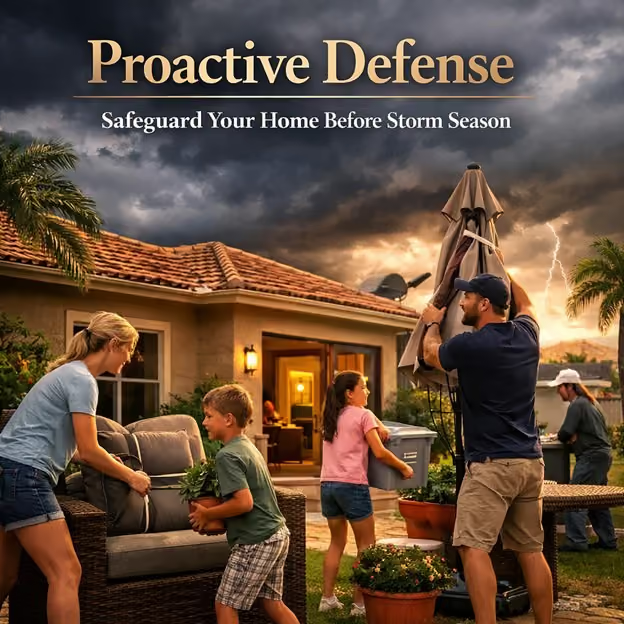
Under Florida's current law, you have one year from the date of loss to file an initial property damage claim. That's it. One year sounds like plenty of time, but it isn't really, especially when you're dealing with the chaos that follows a major storm.
A lot of homeowners fall into the trap of waiting. Maybe the roof leak seems minor. Maybe you're waiting for a contractor to give you a real estimate. Maybe life just gets in the way. But the moment you let that deadline pass, you lose your right to recover anything from your insurance carrier, no matter how valid your claim was.
If your home is affected by a storm, act fast. Call your insurance company. Document everything. Don't assume the damage is too small to matter.
Here's something nobody tells you: a hurricane can destroy your paperwork just as easily as it destroys your furniture. If your insurance policy is sitting in a filing cabinet and your home floods, that policy is gone.
Every Florida homeowner should have a secure, cloud-based digital vault containing these documents before storm season hits:
That last one matters more than people think. When you file a claim, your insurer will ask you to prove what existed before the damage. Without pre-storm documentation, you're relying entirely on their assessment. Having your own evidence gives you leverage.
After a major storm, contractors arrive fast. They show up in your neighborhood before the roads are even clear, offering quick fixes and promising to handle your insurance claim for you. Some are legitimate. Many are not.
Florida law has eliminated Assignment of Benefits (AOB) agreements for residential property claims. That means contractors can no longer legally take over your insurance rights in exchange for their services. If someone hands you paperwork asking you to sign over control of your claim, walk away.
You should also be cautious about paying large sums upfront before your insurer has formally documented the damage. Until there's an official record of the scope of loss, you have very little recourse if a contractor disappears or does shoddy work.
The safest move is to contact an attorney before signing anything related to your property damage claim.
Ready to Protect What You've Built? At Finman Law Group, we help Florida homeowners understand their rights before disaster strikes — and fight for fair outcomes when it does. Don't wait until you're filing a claim to learn the rules. Contact our team today for a consultation and get the legal foundation your storm preparedness plan is missing.





Document Hurricane Isaias damage the right way. Finman Law Group helps Florida owners with delayed, denied, or underpaid storm claims. Free evaluation.
Injured at a Florida hotel? Learn what evidence counts, what to do after the incident, and how Finman Law Group can help. Free evaluation.
Isaias could hit the Gulf Coast as a hurricane this weekend. Learn how Florida and Texas property owners can document, review coverage, and avoid bad contracts.