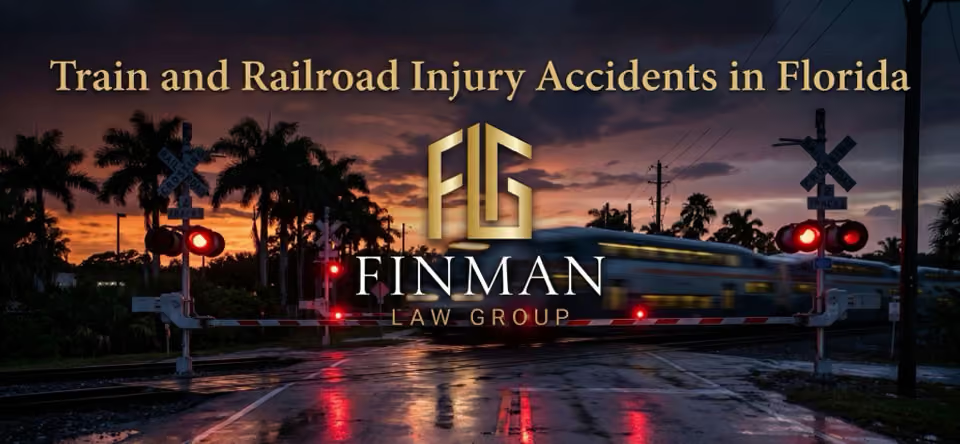
Train and Railroad Injury Accidents in Florida

Train and Railroad Injury Accidents in Florida

Article content

Florida's rail network is busier than ever! Between commuter lines, high speed passenger services, and the freight trains that move goods across the state every single day, more Floridians are living, driving, and walking near active tracks than at any point in recent memory. That growth brings convenience, but it also, it can bring risk.

Train accidents are far less common than car crashes, but when they happen, the results are often devastating. A locomotive can weigh hundreds of tons and can require a mile or more to stop. Victims and their families are then left facing not just serious injuries, but some of the most complicated legal claims in personal injury law.

Why These Cases Are So Complex

A railroad accident is never a simple two party dispute. Investigations can involve the railroad company, equipment manufacturers, local governments responsible for crossings, federal safety agencies, and more. Each party has its own records, its own lawyers, and its own version of events.

Railroad companies also maintain powerful legal teams whose job is to limit liability from the moment an accident occurs. For an injured person recovering in a hospital bed, going up against that machinery alone can feel overwhelming. That imbalance is exactly why experienced legal guidance matters so much in these cases.

Common Types of Railroad Accidents

Rail related injuries in Florida tend to fall into a few categories:

  • Pedestrian strikes at crossings, often tied to malfunctioning signals, poor visibility, or inadequate warnings
  • Vehicle collisions with trains at intersections where gates, lights, or signage failed to do their job
  • Derailments caused by mechanical failures, excessive speed, or poorly maintained track
  • Injuries to railroad workers, which fall under their own set of federal protections

Each scenario raises different questions about responsibility. A crossing accident may come down to whether the warning systems were working properly. A derailment may trace back to skipped inspections or deferred maintenance. Sorting out those details takes investigation, and it takes it quickly.

Who May Be Responsible

Railroad companies and operators have a legal duty to maintain safe crossings, functioning signals, and properly serviced equipment. When they fall short, whether through malfunctioning gates, missing signage, operator error, or neglected maintenance, injured victims may have grounds to pursue compensation.

Responsibility does not always stop with the railroad itself. Depending on the facts, liability may extend to contractors who maintained the track, manufacturers of defective components, or agencies responsible for road and crossing designs. Identifying every responsible party is one of the most important steps in building a strong claim.

Why Evidence Matters So Much

Trains generate an enormous amount of data. Event recorders capture speed and braking information. Signal systems log their own performance. Surveillance cameras, both on trains and near crossings may have captured the moments before impact. Add in accident reports, eyewitness accounts, and federal safety investigations, and the evidence picture becomes rich but also time sensitive.

The challenge is that much of this evidence sits in the railroad's hands. Preserving it requires prompt legal action before records may be lost or possibly overwritten. Public records requests and federal investigation findings can also fill in critical gaps that victims would struggle to access on their own.

What Compensation May Include

Railroad accident claims may cover medical expenses, lost wages, rehabilitation costs, and damages for pain and suffering. Because these accidents can cause significant and sometimes fatal injuries, claims frequently need to account for long term care, reduced earning capacity, and permanent life changes.

In the most tragic cases, families who have lost a loved one may pursue wrongful death claims covering funeral expenses, lost financial support, and the loss of companionship that no settlement can every really replace in life. Valuing these claims properly requires looking beyond the immediate bills and look at the lifelong picture of what an accident took from a victim and their family.

There is a broader impact on this as well. Claims that expose unsafe crossings or neglected maintenance often push rail companies to upgrade infrastructure and improve safety technology. This can result in making tracks safer for entire communities.

Get Guidance From a Team That Knows These Cases

If you or a family member has been hurt in a train or railroad accident anywhere in Florida, the Finman Law Group has experience handling transportation injury cases and can help you understand your options, preserve critical evidence, and pursue the full compensation your situation deserves. Contact the firm today for a consultation.

Florida's rail network is busier than ever! Between commuter lines, high speed passenger services, and the freight trains that move goods across the state every single day, more Floridians are living, driving, and walking near active tracks than at any point in recent memory. That growth brings convenience, but it also, it can bring risk.

Train accidents are far less common than car crashes, but when they happen, the results are often devastating. A locomotive can weigh hundreds of tons and can require a mile or more to stop. Victims and their families are then left facing not just serious injuries, but some of the most complicated legal claims in personal injury law.

Why These Cases Are So Complex

A railroad accident is never a simple two party dispute. Investigations can involve the railroad company, equipment manufacturers, local governments responsible for crossings, federal safety agencies, and more. Each party has its own records, its own lawyers, and its own version of events.

Railroad companies also maintain powerful legal teams whose job is to limit liability from the moment an accident occurs. For an injured person recovering in a hospital bed, going up against that machinery alone can feel overwhelming. That imbalance is exactly why experienced legal guidance matters so much in these cases.

Common Types of Railroad Accidents

Rail related injuries in Florida tend to fall into a few categories:

  • Pedestrian strikes at crossings, often tied to malfunctioning signals, poor visibility, or inadequate warnings
  • Vehicle collisions with trains at intersections where gates, lights, or signage failed to do their job
  • Derailments caused by mechanical failures, excessive speed, or poorly maintained track
  • Injuries to railroad workers, which fall under their own set of federal protections

Each scenario raises different questions about responsibility. A crossing accident may come down to whether the warning systems were working properly. A derailment may trace back to skipped inspections or deferred maintenance. Sorting out those details takes investigation, and it takes it quickly.

Who May Be Responsible

Railroad companies and operators have a legal duty to maintain safe crossings, functioning signals, and properly serviced equipment. When they fall short, whether through malfunctioning gates, missing signage, operator error, or neglected maintenance, injured victims may have grounds to pursue compensation.

Responsibility does not always stop with the railroad itself. Depending on the facts, liability may extend to contractors who maintained the track, manufacturers of defective components, or agencies responsible for road and crossing designs. Identifying every responsible party is one of the most important steps in building a strong claim.

Why Evidence Matters So Much

Trains generate an enormous amount of data. Event recorders capture speed and braking information. Signal systems log their own performance. Surveillance cameras, both on trains and near crossings may have captured the moments before impact. Add in accident reports, eyewitness accounts, and federal safety investigations, and the evidence picture becomes rich but also time sensitive.

The challenge is that much of this evidence sits in the railroad's hands. Preserving it requires prompt legal action before records may be lost or possibly overwritten. Public records requests and federal investigation findings can also fill in critical gaps that victims would struggle to access on their own.

What Compensation May Include

Railroad accident claims may cover medical expenses, lost wages, rehabilitation costs, and damages for pain and suffering. Because these accidents can cause significant and sometimes fatal injuries, claims frequently need to account for long term care, reduced earning capacity, and permanent life changes.

In the most tragic cases, families who have lost a loved one may pursue wrongful death claims covering funeral expenses, lost financial support, and the loss of companionship that no settlement can every really replace in life. Valuing these claims properly requires looking beyond the immediate bills and look at the lifelong picture of what an accident took from a victim and their family.

There is a broader impact on this as well. Claims that expose unsafe crossings or neglected maintenance often push rail companies to upgrade infrastructure and improve safety technology. This can result in making tracks safer for entire communities.

Get Guidance From a Team That Knows These Cases

If you or a family member has been hurt in a train or railroad accident anywhere in Florida, the Finman Law Group has experience handling transportation injury cases and can help you understand your options, preserve critical evidence, and pursue the full compensation your situation deserves. Contact the firm today for a consultation.

Additionally Reads

Daycare and Child Injury Claims in Florida: What Parents Should Know

Daycare and Child Injury Claims in Florida: What Parents Should Know

Learn how Florida daycare injury claims work, steps parents should take after an accident, and how to hold negligent childcare facilities accountable now.

Windstorm Damages and How They Affect Florida Homeowners

Windstorm Damages and How They Affect Florida Homeowners

Discover how windstorms impact Florida homeowners. Learn about damage prevention, insurance claims, and protecting your investment with expert guidance.

Cruiseship Injuries: What Florida Travelers Need to Know

Cruiseship Injuries: What Florida Travelers Need to Know

Explore cruise injury laws for Florida travelers. Learn about maritime rules, legal steps, and protecting your rights when accidents occur on ocean voyages.