Water Damage Claims After Balcony Leaks in Florida Condos

Water Damage Claims After Balcony Leaks in Florida Condos

Article content

When the leak starts above your ceiling and the responsibility gets passed around the building

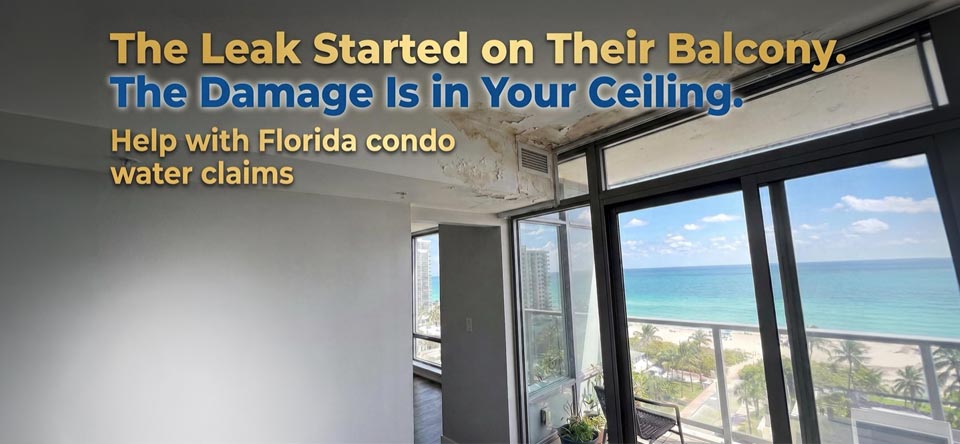
Balconies are one of the best parts of Florida condo living. Morning coffee with a view, ocean breezes, a front-row seat for every sunset. But those same balconies are becoming a growing source of trouble in buildings across the state. Heavy rain, aging waterproofing, and years of structural wear let water seep through balcony surfaces and travel into the units below, and owners usually discover the problem only when a stain blooms on the ceiling or flooring starts to warp near a wall. What follows is often more frustrating than the leak itself, because balcony water damage creates some of the most tangled insurance questions in condo living, with unit owners, associations, and multiple insurers all pointing in different directions.

Why Balcony Leaks Happen

Florida's climate puts relentless pressure on balcony structures. Sun bakes the surfaces, rain pounds them sideways during storms, and salt air works on everything in coastal buildings. Over the years, the protective layers give way:

  • Failing balcony membranes, the waterproof layer beneath the surface, which crack and deteriorate with age and let water penetrate into the concrete below
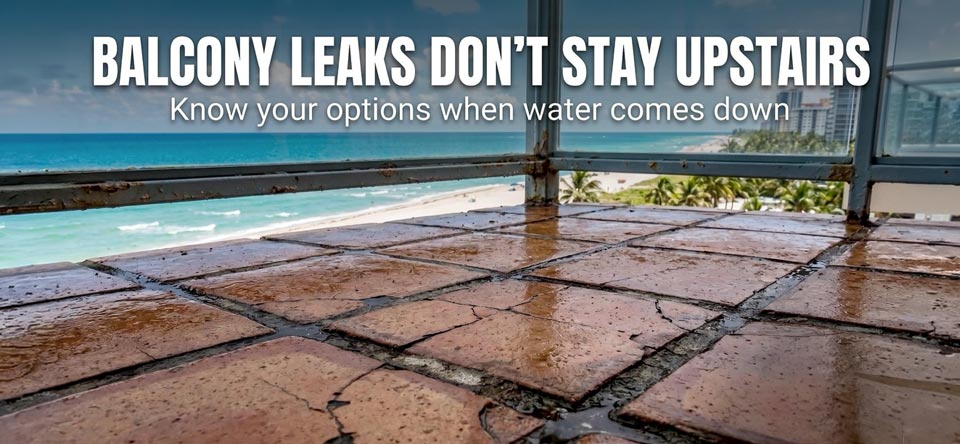
  • Cracked grout and tile that open small pathways for moisture to travel downward with every rainfall

Failed caulk around railings and door thresholds and clogged balcony drains add to the problem. And here's the part that catches owners off guard. The cracks don't need to be big. Even hairline openings let significant water through during a Florida storm, and that water follows the concrete and framing until it finds a ceiling to stain, which usually is in the unit below.
What Condo Owners Typically Do

When water starts dripping from a ceiling or pooling near a wall, owners who handle it best move quickly on two fronts. They document the damage thoroughly, taking photos and videos of the ceiling, walls, flooring, and affected belongings as the situation develops, because a timestamped record establishes when the intrusion happened and how far it spread, which matters enormously when the cause gets debated later. They also notify the association in writing right away, so the incident is formally recorded and the building's responsibility to investigate begins on a documented date rather than a vague memory. Keeping copies of every email, work order, and inspection report builds the paper trail from there. In balcony cases especially, professional moisture assessments help establish where the water actually came from, since the source is usually hidden inside the structure itself.

Why These Claims Get Complicated

Balcony leaks sit in the murkiest territory of condo insurance. Balconies are often a shared structural element under the association's responsibility, while the damaged ceiling and flooring sit inside a unit the owner insures. So who pays? The association may call it the owner's problem. The owner's insurer may call it a maintenance issue and deny the claim. The association's insurer may dispute the cause entirely. Florida condo documents draw these lines differently from building to building, and while everyone debates, the family in the unit below lives with the stains, the smell, and the growing worry about mold. It's a lot to untangle while managing repairs and daily life at the same time, and owners often feel like the only person in the building without an advocate.

Your Home Deserves Better Than a Runaround

Water damage in a home feels deeply personal. Families worry about mold spreading behind walls, ruined flooring, and how long the repairs will drag on. Living with the damage while insurers and associations trade responsibility disrupts routines and creates stress that lingers long after the storm that caused it. Condo owners across Miami, Fort Lauderdale, and Florida's coastal communities deserve a clear path forward and support that stays steady from the first drip to the final repair.

If your condo was damaged by a balcony leak, whether from your balcony or the one above, Finman Law Group can help you understand your options and pursue a fair claim. Contact us today for a free evaluation.

When the leak starts above your ceiling and the responsibility gets passed around the building

Balconies are one of the best parts of Florida condo living. Morning coffee with a view, ocean breezes, a front-row seat for every sunset. But those same balconies are becoming a growing source of trouble in buildings across the state. Heavy rain, aging waterproofing, and years of structural wear let water seep through balcony surfaces and travel into the units below, and owners usually discover the problem only when a stain blooms on the ceiling or flooring starts to warp near a wall. What follows is often more frustrating than the leak itself, because balcony water damage creates some of the most tangled insurance questions in condo living, with unit owners, associations, and multiple insurers all pointing in different directions.

Why Balcony Leaks Happen

Florida's climate puts relentless pressure on balcony structures. Sun bakes the surfaces, rain pounds them sideways during storms, and salt air works on everything in coastal buildings. Over the years, the protective layers give way:

  • Failing balcony membranes, the waterproof layer beneath the surface, which crack and deteriorate with age and let water penetrate into the concrete below
  • Cracked grout and tile that open small pathways for moisture to travel downward with every rainfall

Failed caulk around railings and door thresholds and clogged balcony drains add to the problem. And here's the part that catches owners off guard. The cracks don't need to be big. Even hairline openings let significant water through during a Florida storm, and that water follows the concrete and framing until it finds a ceiling to stain, which usually is in the unit below.

What Condo Owners Typically Do

When water starts dripping from a ceiling or pooling near a wall, owners who handle it best move quickly on two fronts. They document the damage thoroughly, taking photos and videos of the ceiling, walls, flooring, and affected belongings as the situation develops, because a timestamped record establishes when the intrusion happened and how far it spread, which matters enormously when the cause gets debated later. They also notify the association in writing right away, so the incident is formally recorded and the building's responsibility to investigate begins on a documented date rather than a vague memory. Keeping copies of every email, work order, and inspection report builds the paper trail from there. In balcony cases especially, professional moisture assessments help establish where the water actually came from, since the source is usually hidden inside the structure itself.

Why These Claims Get Complicated

Balcony leaks sit in the murkiest territory of condo insurance. Balconies are often a shared structural element under the association's responsibility, while the damaged ceiling and flooring sit inside a unit the owner insures. So who pays? The association may call it the owner's problem. The owner's insurer may call it a maintenance issue and deny the claim. The association's insurer may dispute the cause entirely. Florida condo documents draw these lines differently from building to building, and while everyone debates, the family in the unit below lives with the stains, the smell, and the growing worry about mold. It's a lot to untangle while managing repairs and daily life at the same time, and owners often feel like the only person in the building without an advocate.

Your Home Deserves Better Than a Runaround

Water damage in a home feels deeply personal. Families worry about mold spreading behind walls, ruined flooring, and how long the repairs will drag on. Living with the damage while insurers and associations trade responsibility disrupts routines and creates stress that lingers long after the storm that caused it. Condo owners across Miami, Fort Lauderdale, and Florida's coastal communities deserve a clear path forward and support that stays steady from the first drip to the final repair.

If your condo was damaged by a balcony leak, whether from your balcony or the one above, Finman Law Group can help you understand your options and pursue a fair claim. Contact us today for a free evaluation.

Additionally Reads

When to Get Legal Representation After a Workplace Injury in Houston

When to Get Legal Representation After a Workplace Injury in Houston

Dangerous conditions and missing warnings injure workers across Greater Houston. Learn what injured employees typically do and how Finman Law Group helps. Free evaluation.

Property Damage Claims After Storm Edouard Hit Texas

Property Damage Claims After Storm Edouard Hit Texas

Storm Edouard left roof leaks, broken windows, and water damage across Southeast Texas. Finman Law Group helps homeowners with delayed or underpaid claims.

When Your Upstairs Neighbor Floods Your Apartment or Condo and Nobody Wants to Pay

When Your Upstairs Neighbor Floods Your Apartment or Condo and Nobody Wants to Pay

Upstairs neighbor water damage creates messy condo and apartment claims. Learn what residents typically do and how Finman Law Group can help. Free evaluation.