Your Insurer Approved Only Part of Your Storm Damage Claim and Here’s What Comes Next

Your Insurer Approved Only Part of Your Storm Damage Claim and Here’s What Comes Next

Article content

How Florida homeowners can review a partial approval, document disputed damage, and understand their next steps

After a storm, getting an insurance payment can feel like relief, right up until you realize it doesn’t appear to cover the repairs you expected. An insurer may agree that some damage is covered while disputing other areas, quantities, materials, or repair methods. If that’s where you’ve landed, here’s the first thing to hold onto. A partial approval doesn’t necessarily mean the claim is finished. It means you need to understand exactly what the insurer accepted, what it disputed, and what remains unresolved, and that understanding starts with reading the letter and estimate carefully. Identify which rooms and building components are included, what work is priced, and whether any damage is listed as excluded, unrelated, or still under review. When the explanation is unclear, ask for clarification in writing and keep the response.

Compare the Scope, Not Just the Total

It’s tempting to focus on the gap between the insurer’s payment and your contractor’s quote, but the more useful comparison starts with the work each estimate actually includes. Does one cover roof underlayment, flashing, insulation, drywall, painting, or debris removal while the other leaves those out? Are the quantities, materials, and labor similar? Does the contractor anticipate opening a wall or ceiling to reach hidden damage? A contractor’s estimate and an insurance estimate are often prepared for different purposes, and a higher quote alone doesn’t prove the insurer wrong. Specific, documented differences are what move claims, so ask your contractor to explain the scope and back it with photographs, measurements, and itemized detail.

Document What You Can Safely See

Build the record while it’s still buildable, always safely:

  • Photograph visible damage before repairs, in wide shots that show the area and close-ups that show the detail
  • Save receipts for emergency measures, temporary lodging, and materials, plus a dated record of calls, inspections, and documents submitted

Storm damage isn’t always fully visible at the first inspection. Water travels behind the walls, insulation stays damp and typically roof issues become clearer once repairs begin. If additional damage is discovered then document it promptly and notify the insurer according to your policy. And never delay urgent mitigation for a perfect photograph, or take on dangerous inspections yourself. Your safety outranks every piece of paperwork.

Understand the Policy and the Written Explanation

Coverage depends on the policy language, the cause of loss, exclusions, deductibles, and the facts of your property and policies may treat wind damage, flood damage, wear and tear, and long-term leakage totally differently. A disagreement about the cause of damage usually calls for evidence from qualified professionals rather than just with assumptions. Florida law also includes requirements around written explanations for certain claim decisions, and estimates can change as a claim develops. The specific rules depend on your claim and the law in effect, which is exactly why reading your own policy beats relying on a general online summary.

How Homeowners Typically Stay Organized

Homeowners who navigate partial approvals well tend to keep everything connected to the claim in one place, from the policy and the insurer’s estimate to letters, photographs, contractor documents, and receipts, along with a general sense of when each piece arrived. They often prefer written communication over phone calls, since it leaves a record both sides can refer back to, and they tend to hold onto copies of whatever they provide when the insurer requests more information. Releases, assignments, and settlement documents deserve particular care, because these papers can often times carry effects that aren’t obvious upon first reading and homeowners who’ve been through disputes describe wishing they’d fully understood a document’s reach before signing it. Signatures are much easier to give then to take back.

When to Seek Guidance

A partial payment can be appropriate in some circumstances, and some disputes resolve with one good letter of documentation. But if the explanation doesn’t match the evidence, important repairs appear to be missing, or deadlines are approaching, that’s the moment for advice tailored to your claim. Having experienced eyes on the written decision, the supporting documents, and the policy itself can change how the rest of the claim unfolds, and no homeowner should have to absorb a shortfall just because the paperwork got heavy.

Did your Florida storm claim come back only partially approved? Finman Law Group can review the written decision and help you understand your options. Contact us today for a free evaluation.‍

How Florida homeowners can review a partial approval, document disputed damage, and understand their next steps

After a storm, getting an insurance payment can feel like relief, right up until you realize it doesn’t appear to cover the repairs you expected. An insurer may agree that some damage is covered while disputing other areas, quantities, materials, or repair methods. If that’s where you’ve landed, here’s the first thing to hold onto. A partial approval doesn’t necessarily mean the claim is finished. It means you need to understand exactly what the insurer accepted, what it disputed, and what remains unresolved, and that understanding starts with reading the letter and estimate carefully. Identify which rooms and building components are included, what work is priced, and whether any damage is listed as excluded, unrelated, or still under review. When the explanation is unclear, ask for clarification in writing and keep the response.

Compare the Scope, Not Just the Total

It’s tempting to focus on the gap between the insurer’s payment and your contractor’s quote, but the more useful comparison starts with the work each estimate actually includes. Does one cover roof underlayment, flashing, insulation, drywall, painting, or debris removal while the other leaves those out? Are the quantities, materials, and labor similar? Does the contractor anticipate opening a wall or ceiling to reach hidden damage? A contractor’s estimate and an insurance estimate are often prepared for different purposes, and a higher quote alone doesn’t prove the insurer wrong. Specific, documented differences are what move claims, so ask your contractor to explain the scope and back it with photographs, measurements, and itemized detail.

Document What You Can Safely See

Build the record while it’s still buildable, always safely:

  • Photograph visible damage before repairs, in wide shots that show the area and close-ups that show the detail
  • Save receipts for emergency measures, temporary lodging, and materials, plus a dated record of calls, inspections, and documents submitted

Storm damage isn’t always fully visible at the first inspection. Water travels behind the walls, insulation stays damp and typically roof issues become clearer once repairs begin. If additional damage is discovered then document it promptly and notify the insurer according to your policy. And never delay urgent mitigation for a perfect photograph, or take on dangerous inspections yourself. Your safety outranks every piece of paperwork.

Understand the Policy and the Written Explanation

Coverage depends on the policy language, the cause of loss, exclusions, deductibles, and the facts of your property and policies may treat wind damage, flood damage, wear and tear, and long-term leakage totally differently. A disagreement about the cause of damage usually calls for evidence from qualified professionals rather than just with assumptions. Florida law also includes requirements around written explanations for certain claim decisions, and estimates can change as a claim develops. The specific rules depend on your claim and the law in effect, which is exactly why reading your own policy beats relying on a general online summary.

How Homeowners Typically Stay Organized

Homeowners who navigate partial approvals well tend to keep everything connected to the claim in one place, from the policy and the insurer’s estimate to letters, photographs, contractor documents, and receipts, along with a general sense of when each piece arrived. They often prefer written communication over phone calls, since it leaves a record both sides can refer back to, and they tend to hold onto copies of whatever they provide when the insurer requests more information. Releases, assignments, and settlement documents deserve particular care, because these papers can often times carry effects that aren’t obvious upon first reading and homeowners who’ve been through disputes describe wishing they’d fully understood a document’s reach before signing it. Signatures are much easier to give then to take back.

When to Seek Guidance

A partial payment can be appropriate in some circumstances, and some disputes resolve with one good letter of documentation. But if the explanation doesn’t match the evidence, important repairs appear to be missing, or deadlines are approaching, that’s the moment for advice tailored to your claim. Having experienced eyes on the written decision, the supporting documents, and the policy itself can change how the rest of the claim unfolds, and no homeowner should have to absorb a shortfall just because the paperwork got heavy.

Did your Florida storm claim come back only partially approved? Finman Law Group can review the written decision and help you understand your options. Contact us today for a free evaluation.‍

Additionally Reads

Wrongful Death Claims in Houston and What Families Should Know After Losing a Loved One

Wrongful Death Claims in Houston and What Families Should Know After Losing a Loved One

Learn how wrongful death claims work in Houston, who may bring a claim, and what families should know about evidence and deadlines. Free evaluation.
What Florida Property Owners Should Document After Hurricane Isaias

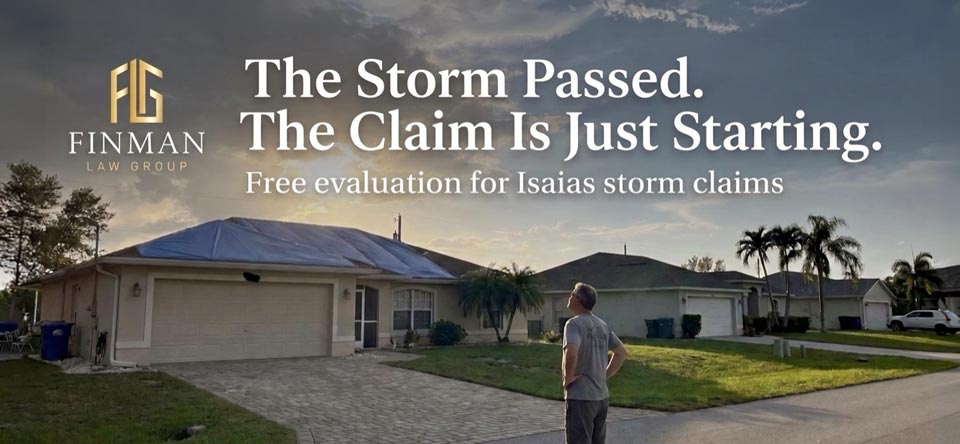
What Florida Property Owners Should Document After Hurricane Isaias

Document Hurricane Isaias damage the right way. Finman Law Group helps Florida owners with delayed, denied, or underpaid storm claims. Free evaluation.
Injured at a Florida Hotel and Unsure What Comes Next

Injured at a Florida Hotel and Unsure What Comes Next

Injured at a Florida hotel? Learn what evidence counts, what to do after the incident, and how Finman Law Group can help. Free evaluation.