

Topic:
Personal Injury, Accidents, Slip & Fall
Article content
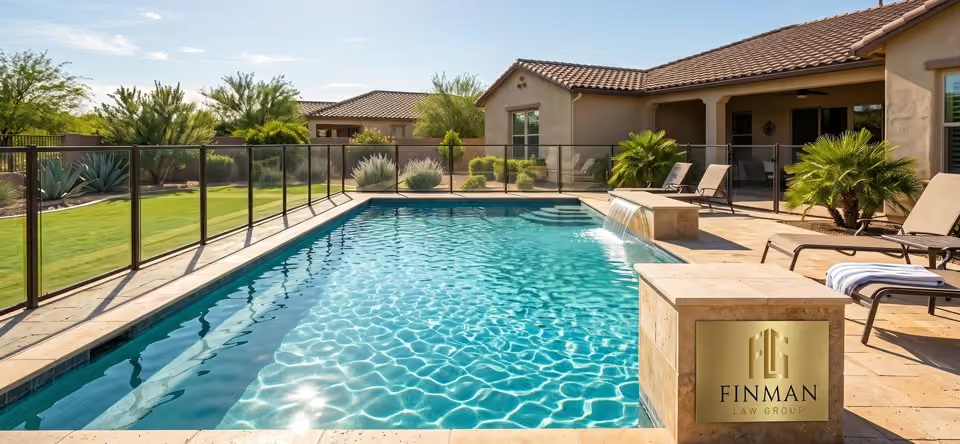
Ask almost anyone in Texas what summer looks like and a sparkling swimming pool is probably part of the picture. Backyard pools, apartment complex pools, neighborhood community centers, they all play a part into how Texans beat the heat. Pools mean birthday parties, weekend barbecues, and kids learning to swim. But when an accident happens at a pool, the mood changes pretty fast. What was supposed to be a relaxing afternoon becomes frightening and confusing, and families are often left wondering what just happened and what comes next.
Pool accidents come in more varieties than most people expect. Slippery decking, uneven surfaces, broken tiles, and poorly maintained equipment all play a role. Diving boards and slides add their own risks. Sometimes the water itself is the issue, with cloudy conditions hiding a sudden change in depth. Children are especially vulnerable, and even strong adult swimmers can be caught off guard by hazards they never saw coming.
In some cases, accidents trace back to human factors rather than the pool itself. Safety rules were not posted or not followed. Supervision was thin or missing entirely. A gate that should have been locked was left open. These details often matter quite a bit when people look back and try to understand how an injury occurred.
Texas has general safety standards for both residential and commercial pools. These include fencing requirements, drain safety regs, and guidelines for signage around the general pool area. The rules exist for a reason and are designed to reduce the risk of exactly the kinds of accidents that send people to emergency rooms every summer. The problem is that the standards are not always followed consistently. A fence may be too short or broken, a drain cover may be outdated, or warning signs may have faded or possibly not there anymore.
When an injury happens at a pool where safety measures were not in place or lacking, families often feel a mix of physical pain, emotional stress, and a type of uncertainty about what to do next. That combination can be overwhelming, and it is completely understandable.
In the hours and days after a pool accident, people tend to focus on a few practical steps that help bring order to a chaotic situation:
These steps are not about pointing fingers at the moment. They are about preserving an accurate picture of what happened while the details are still fresh. Memories can fade quickly in life and conditions at a pool can change overnight.
Injuries at apartment complexes, hotels, water parks, and community pools can raise additional questions. Who was responsible for maintaining the area? Was a lifeguard supposed to be on duty that day? Were inspections up to date? These situations tend to involve more moving parts than a backyard incident, and the answers are rarely obvious to the people involved. That’s why many Texans choose to speak with professionals who can help them understand how pool-related incidents are generally handled and what the process usually looks like.
Swimming pool injuries can be serious, and the emotional weight that follows them is real. Still, understanding the common causes and the general steps people take afterward helps families feel more confident and less alone as they move forward. Pools should be a source of joy in Texas, and knowing how these situations typically unfold is one way to protect that.
If someone in your family has been injured in a swimming pool accident in Texas and you are unsure where to turn, Finman Law Group is ready to help you understand your options. Contact our team today to schedule a consultation.





Insurer approved only part of your Florida storm claim? Learn how to review the estimate and document disputed damage. Finman Law Group. Free evaluation.
Learn how wrongful death claims work in Houston, who may bring a claim, and what families should know about evidence and deadlines. Free evaluation.
Document Hurricane Isaias damage the right way. Finman Law Group helps Florida owners with delayed, denied, or underpaid storm claims. Free evaluation.