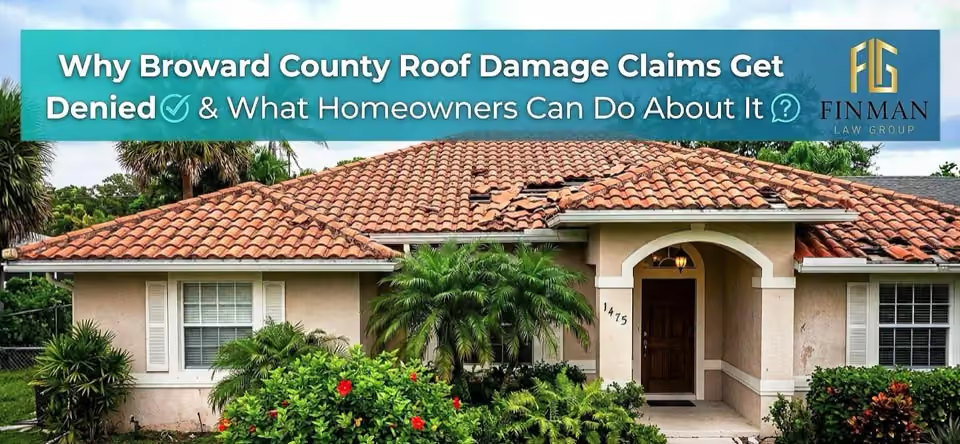
Why Broward County Roof Damage Claims Get Denied, and What Homeowners Can Do About It

Why Broward County Roof Damage Claims Get Denied, and What Homeowners Can Do About It

Article content

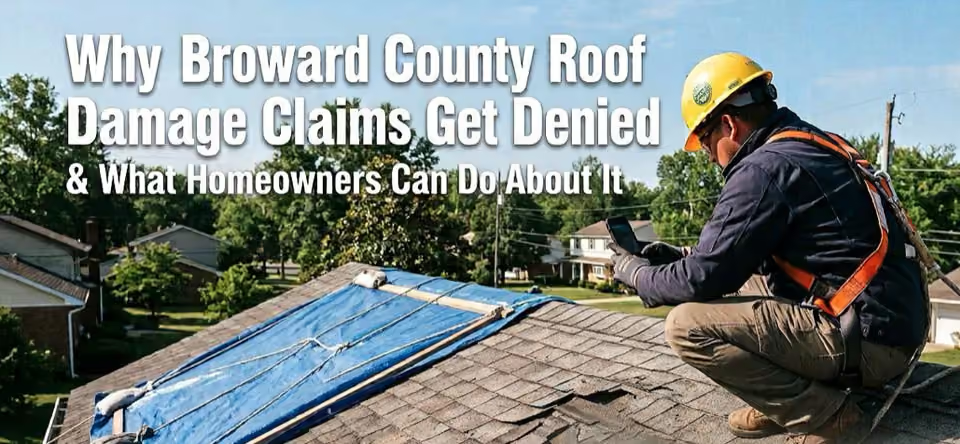
Wind lifted shingles, cracked tile, and delayed ceiling stains are common across South Florida. Here is how the claims process usually unfolds.

Broward County homeowners know how fast a quiet afternoon can turn. The sky darkens over Fort Lauderdale, the winds pick up across Hollywood and Davie, and then within 20-30 minutes a roof that had been doing its job for a decade is suddenly letting water into the attic. Roof damage is one of the most common property issues residents face in South Florida, and it rarely announces itself politely! A roof protects everything underneath it and when it fails, the disruption can reach the whole household.

Why Broward Roofs Take the Worst of Florida Weather

The combination that wears out a roof in this region is pretty specific. Sustained coastal wind, sideways rain, salt air, and the relentless UV exposure all work on the same materials at the same time. Asphalt shingles lose granules faster here than almost anywhere else in the country. Barrel tile cracks under flying debris. Flat and low slope roofs common in Pembroke Pines and Miramar properties hold standing water when a drain clogs during a downpour.

Age compounds all of it. A roof installed in 2010 has now absorbed more than fifteen storm seasons. It may look intact from the driveway while the underlayment beneath may have already lost its seal.
The Damage Homeowners Notice Most Often

Most Broward roof damage falls into a handful of recognizable patterns and knowing them can help a homeowner describe the problem accurately when they report it.

  • Wind lifted or missing shingles that expose the underlayment and let water travel sideways under the remaining courses
  • Cracked, slipped, or displaced barrel tiles, usually from impact during a storm
  • Flashing separation around vents, skylights, and chimney lines where water enters at the seams
  • Ceiling stains, bubbling paint, or a musty attic smell that shows up days or weeks after the weather cleared

That last one causes the most confusion. Interior evidence often surfaces well after the storm that caused it, which makes the timeline harder to establish later on.

The Instinct to Repair Fast, and Why Documentation Comes First

The natural response to a leaking roof is to stop the leak. Homeowners call a roofer, tarp the area, and then dry out the room. That instinct is correct for protecting the property and Florida policies generally expect owners to take reasonable steps to prevent further damage. The complication is that a fully repaired roof is oftentimes difficult to evaluate afterward.

A few habits tend to make the process smoother:

  • Photograph the roof, the attic, and every affected interior surface before anything is patched or removed
  • Keep tarping receipts, water extraction invoices, and repair estimates together in one place
  • Write down the date the weather event occurred and the date the damage was first noticed
  • Save the roof's original installation or replacement records if they are available

None of this is complicated, it simply preserves the picture of what the property looked like before anyone touched it.

Where Broward Homeowners Commonly Get Stuck

Disagreements usually cluster around causation. An insurer may attribute a leak to age, prior wear, or a maintenance issue rather than to a specific storm. Payouts sometimes cover a partial section of roof when the surrounding material no longer matches or no longer meets current Florida Building Code requirements. Timelines stretch, adjusters change, and requests for additional documentation arrive months in.

Understanding that these are common outcomes, rather than personal setbacks, helps homeowners stay organized instead of discouraged.

The Part Nobody Talks About

Roof damage is genuinely stressful. It interrupts sleep, creates worry every time the forecast turns, and arrives with expenses no one budgeted for. Many Broward families feel dismissed when a payout does not come close to what a licensed roofer says the repair actually costs. That frustration is reasonable. A home is not an abstraction, and neither is the feeling of watching water come through a ceiling you just paid to fix.

Get Clarity on Your Roof Damage Claim

If your Fort Lauderdale, Hollywood, Davie, or Pembroke Pines home has roof damage and you are unsure whether your claim is being handled fairly, Finman Law Group can review your situation and help you understand your options. Contact us today for a free evaluation of your roof damage claim.

Wind lifted shingles, cracked tile, and delayed ceiling stains are common across South Florida. Here is how the claims process usually unfolds.

Broward County homeowners know how fast a quiet afternoon can turn. The sky darkens over Fort Lauderdale, the winds pick up across Hollywood and Davie, and then within 20-30 minutes a roof that had been doing its job for a decade is suddenly letting water into the attic. Roof damage is one of the most common property issues residents face in South Florida, and it rarely announces itself politely! A roof protects everything underneath it and when it fails, the disruption can reach the whole household.

Why Broward Roofs Take the Worst of Florida Weather

The combination that wears out a roof in this region is pretty specific. Sustained coastal wind, sideways rain, salt air, and the relentless UV exposure all work on the same materials at the same time. Asphalt shingles lose granules faster here than almost anywhere else in the country. Barrel tile cracks under flying debris. Flat and low slope roofs common in Pembroke Pines and Miramar properties hold standing water when a drain clogs during a downpour.

Age compounds all of it. A roof installed in 2010 has now absorbed more than fifteen storm seasons. It may look intact from the driveway while the underlayment beneath may have already lost its seal.

The Damage Homeowners Notice Most Often

Most Broward roof damage falls into a handful of recognizable patterns and knowing them can help a homeowner describe the problem accurately when they report it.

  • Wind lifted or missing shingles that expose the underlayment and let water travel sideways under the remaining courses
  • Cracked, slipped, or displaced barrel tiles, usually from impact during a storm
  • Flashing separation around vents, skylights, and chimney lines where water enters at the seams
  • Ceiling stains, bubbling paint, or a musty attic smell that shows up days or weeks after the weather cleared

That last one causes the most confusion. Interior evidence often surfaces well after the storm that caused it, which makes the timeline harder to establish later on.

The Instinct to Repair Fast, and Why Documentation Comes First

The natural response to a leaking roof is to stop the leak. Homeowners call a roofer, tarp the area, and then dry out the room. That instinct is correct for protecting the property and Florida policies generally expect owners to take reasonable steps to prevent further damage. The complication is that a fully repaired roof is oftentimes difficult to evaluate afterward.

A few habits tend to make the process smoother:

  • Photograph the roof, the attic, and every affected interior surface before anything is patched or removed
  • Keep tarping receipts, water extraction invoices, and repair estimates together in one place
  • Write down the date the weather event occurred and the date the damage was first noticed
  • Save the roof's original installation or replacement records if they are available

None of this is complicated, it simply preserves the picture of what the property looked like before anyone touched it.

Where Broward Homeowners Commonly Get Stuck

Disagreements usually cluster around causation. An insurer may attribute a leak to age, prior wear, or a maintenance issue rather than to a specific storm. Payouts sometimes cover a partial section of roof when the surrounding material no longer matches or no longer meets current Florida Building Code requirements. Timelines stretch, adjusters change, and requests for additional documentation arrive months in.

Understanding that these are common outcomes, rather than personal setbacks, helps homeowners stay organized instead of discouraged.

The Part Nobody Talks About

Roof damage is genuinely stressful. It interrupts sleep, creates worry every time the forecast turns, and arrives with expenses no one budgeted for. Many Broward families feel dismissed when a payout does not come close to what a licensed roofer says the repair actually costs. That frustration is reasonable. A home is not an abstraction, and neither is the feeling of watching water come through a ceiling you just paid to fix.

Get Clarity on Your Roof Damage Claim

If your Fort Lauderdale, Hollywood, Davie, or Pembroke Pines home has roof damage and you are unsure whether your claim is being handled fairly, Finman Law Group can review your situation and help you understand your options. Contact us today for a free evaluation of your roof damage claim.

Additionally Reads

Why Greater Houston Insurance Claims Come Back Underpaid, and What Homeowners Do Next

Why Greater Houston Insurance Claims Come Back Underpaid, and What Homeowners Do Next

Received a low insurance settlement in the Greater Houston area? Learn why underpaid claims happen, what documentation helps, and how homeowners respond.

Accidents Involving Florida Hotel Shuttle Vans and Resort Transportation

Accidents Involving Florida Hotel Shuttle Vans and Resort Transportation

Hotel shuttle and resort transportation accidents are rising in Orlando, Miami Beach, and Tampa. Learn what passengers should know and how Finman Law Group helps.

Slip-and-Fall Injuries Inside Florida Grocery Stores and Supermarkets

Slip-and-Fall Injuries Inside Florida Grocery Stores and Supermarkets

Slip-and-fall injuries happen daily in Florida grocery stores and supermarkets. Learn the common hazards and how Finman Law Group can help injured shoppers.