

Topic:
Property & Casualty

Article content
Four signs Greater Houston homeowners should look for when comparing an insurer's estimate against what contractors in Katy, Sugar Land, and Spring actually charge.
Homeowners across the Greater Houston area have learned to expect the unexpected. Gulf moisture drives sudden windstorms through Katy and Cypress. A slab leak surfaces in Sugar Land without warning. A hail line moves through Spring and may take out half the roofs on a street. Families file claims believing the policy they have paid into for years will cover the loss. Then the settlement letter arrives, and the number on it does not resemble the repair reality at all.
Underpaid claims are one of the most common complaints among Houston area property owners, and they leave families in an awkward position: technically approved, yet, practically stranded.
Underpayment is rarely dramatic. It usually comes from a series of small decisions that each shave value off the final number.
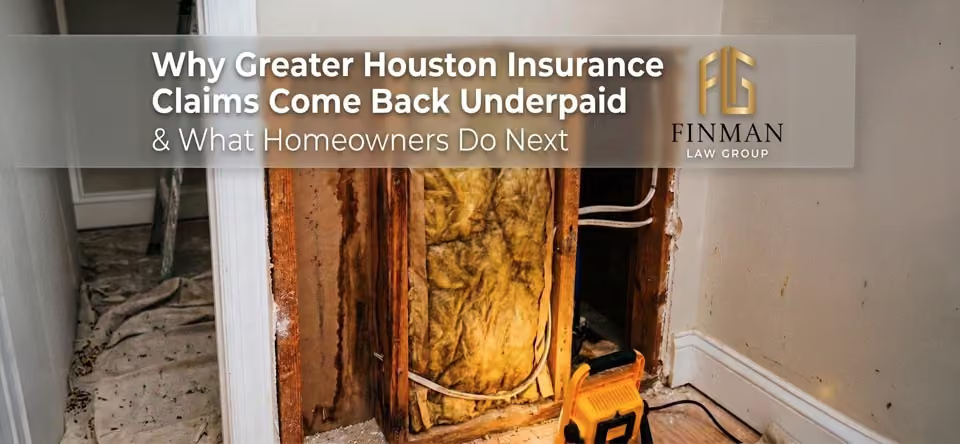
Estimating software applies regional pricing that may lag behind what Houston contractors actually charge in the current labor market. Inspections happen quickly, sometimes from the ground or sometimes from a drone, and hidden damage behind drywall or beneath flooring never enters the file at all. Damage gets classified as cosmetic when it’s most likely functional. Depreciation is applied aggressively. Matching materials, code upgrades, and the cost of tearing out undamaged sections to reach the damaged ones are left out entirely.
Individually, each adjustment sounds defensible. Together, they can cut an estimate by a third or even more!
Homeowners often sense something is off before they can articulate why. A few concrete indicators are worth checking:
Most people start by trying to make sense of the paperwork, comparing the insurer's line items against the contractor's proposal side by side. That comparison is genuinely useful because it turns a vague feeling of unfairness into a specific, and documentable difference.
From there some common next steps include requesting a copy of the full adjuster's report and estimate rather than the summary letter, gathering two or three written contractor estimates that reflect current Houston pricing, and asking for a reinspection when hidden damage was discovered after the original visit. Photographs taken during demolition or tear out often reveal exactly what the first inspection missed.
Keeping a written log of every call, adjuster name, and date also helps more than people expect. Claims that stretch across months tend to change hands, and a clean record prevents starting over each time.
A low payout is discouraging in a way that goes beyond arithmetic. Homeowners often describe feeling unheard and as though someone who spent twenty minutes at the property decided the outcome of something they have lived with every day since it happened. It is not only about the money as it’s also about knowing your home can be made whole again, and about being taken seriously when you say the damage is worse than it looks.
Families in Houston, Katy, Sugar Land, and Spring deserve transparency about how their settlement was calculated and a fair opportunity to correct it when the math does not hold up.
If your property insurance claim in the Greater Houston area came back underpaid, Finman Law Group can review your settlement and help you understand what your options look like from here. Reach out today for a free evaluation of your underpaid claim.






Isaias could hit the Gulf Coast as a hurricane this weekend. Learn how Florida and Texas property owners can document, review coverage, and avoid bad contracts.

Neighborhood Electric Vehicles are popular in Florida beach towns. Learn why classification, insurance, and road rules matter after an accident. Free evaluation.
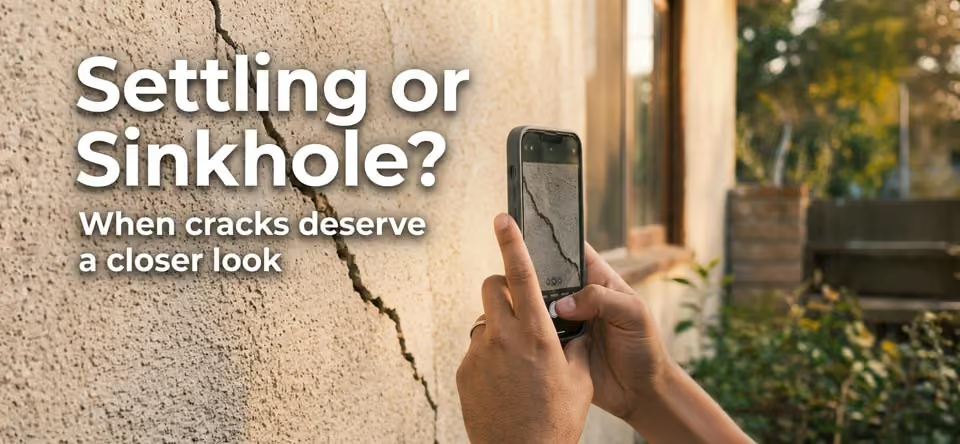
Seeing cracks in your Florida home? Learn the difference between normal settling and possible sinkhole damage and why it matters for a claim. Free evaluation.